Stock (chicken, beef, vegetable, dashi)
With care — Allowed by some hospitals and not others, or allowed only prepared a particular way.
In one line: Keep it clear and strained, with no vegetable pieces.
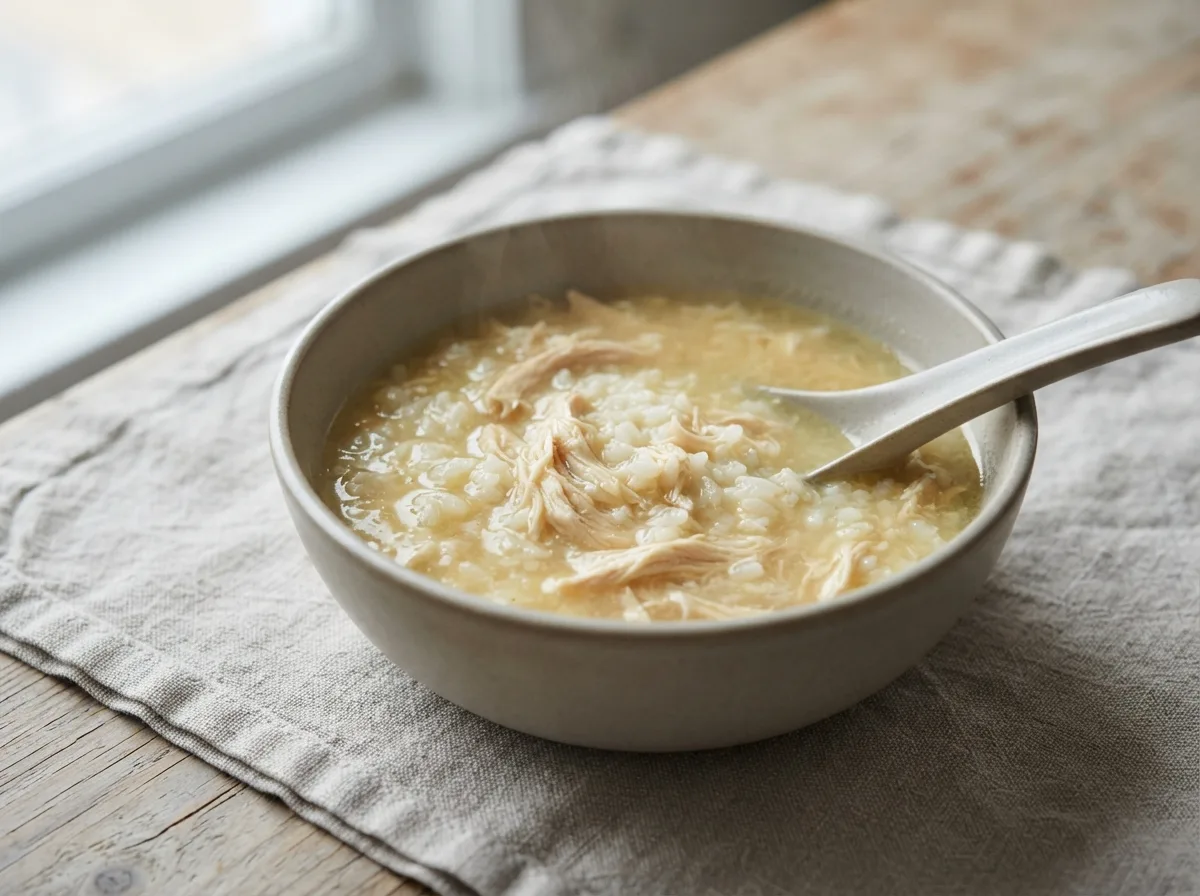
When herbs and spices are restricted, stock carries the flavour. It is behind most of the savoury recipes here, and it is also the base of the broths and sipping cups that are often the only thing that appeals on a bad day.
The reason stock is marked as needing care rather than allowed outright is that it can carry the very things this diet removes. A homemade stock is full of vegetable debris until it is strained. A shop-bought pot can have visible herbs in it. A stock made from the vegetables in the pan is not clear until you make it clear.
The preparation
Clear and strained, with nothing floating and nothing settled at the bottom. Strain twice, once through a sieve and once through muslin, and chill it so you can lift the set fat off in a sheet. A good stock cube dissolved in hot water is entirely acceptable, and most of these recipes assume one. See clear, strained stock.
Read the label on cubes and pots. Some contain visible dried herbs, and many contain celery, which is worth knowing if you are avoiding it or are allergic.
What this book does
Uses stock everywhere and asks for it strained every time. The recipe for double-strained chicken stock makes a tray of frozen cubes that will improve everything else in the book.
If you have been told to leave it out
That is unusual, but a stock heavy in salt may be limited for other reasons. Milk, butter and cheese will build a savoury base without it.
Recipes using it
- Avgolemono, the Greek lemon and rice soup
- Bangers and mash with onion gravy
- Beef ragù with white tagliatelle
- Karl Marx's beetroot and potato soup
- Slow-braised beef with swede and carrot mash
- Butternut and carrot soup with a cream swirl
- Chicken and ginger congee
- Chicken and ham bake in white sauce
- Beatrice Webb's chicken and leek pie
- Chicken and rice broth in a mug
- Chicken blanquette
- Chicken cacciatore with passata
- Trotsky's clear chicken noodle broth
- Cottage pie for two with silky mash
- Cream of cauliflower soup with a cheese crouton
- Cream of chicken soup
- Creamy chicken and white wine casserole
- Clear dashi with silken tofu and egg ribbons
- Smooth tomato soup with cream
- Greek lemon chicken and potatoes
- Rosa Luxemburg's spinach and potato soup
- Chicken and potato stew with creamed courgette
- Warm Marmite broth
- Smooth tomato sauce
- Pastina in brodo
- Potato and leek velouté
- Quorn bolognese with white spaghetti
- Roast chicken thighs with gravy and mash for two
- Saffron risotto
- Ho Chi Minh's silken tofu and ginger broth
- Smooth gravy
- Gramsci's soft cheesy polenta
- Toad in the hole for two
- Udon in dashi with a soft egg