Beatrice Webb's chicken and leek pie
A creamy filling under a lid of golden puff pastry
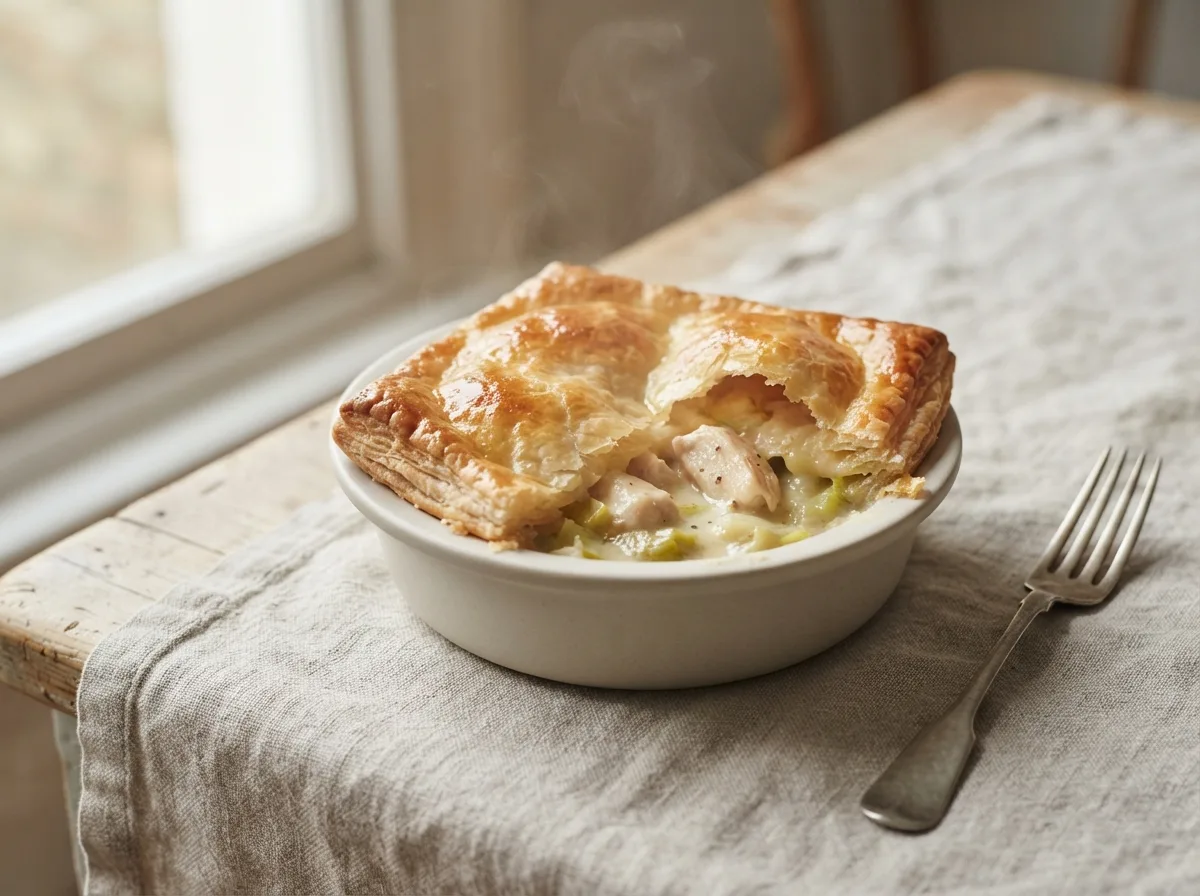
Halves into one small pie in a smaller dish. Freeze the second pie unbaked or baked, well wrapped, for up to three months, and defrost it in the fridge overnight.
Leek is the vegetable this diet distrusts most, and not without reason. Raw or under-cooked, it is pure stubborn string. Sliced very finely and given fifteen slow minutes in butter, it turns into something closer to a sauce than a vegetable, disappearing entirely into the filling, and that is the whole trick here. Chicken thigh, cooked gently in the same pan, stays tender through a short simmer, and a shop-bought sheet of puff pastry means the only real work is the filling underneath it. Once that lid is golden and risen, nobody at the table would guess that anything had been left out of the pan below it.
From the chronicle · London, 1935
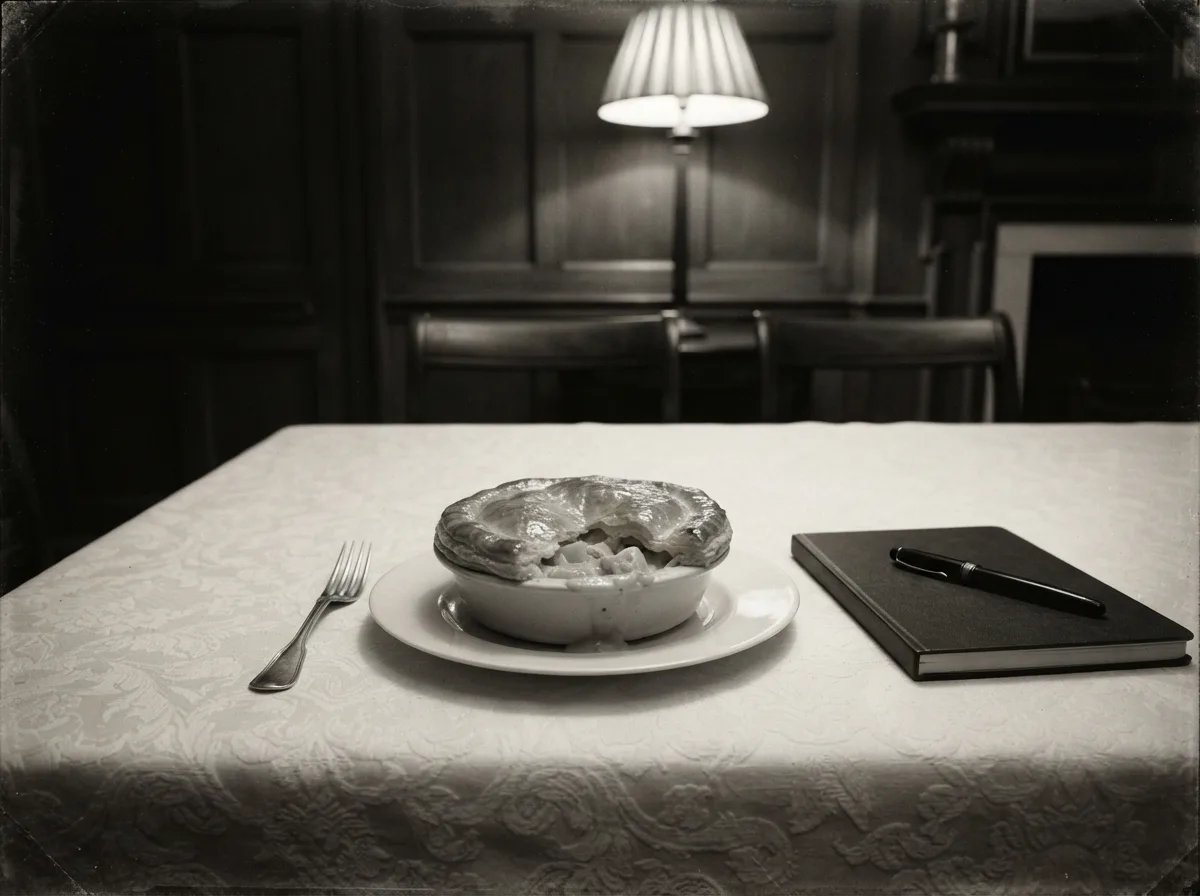
The cook's daughter ran a café off Stoke Newington High Street until well into the 1980s and fed me on Thursdays, when I was between kitchens, and it was over her counter that I first heard about the Webbs' suppers. Her mother had cooked one in the spring of 1935 with Shaw at the table, which meant a second pie with no chicken in it and a good deal of talk about the first. Beatrice Webb was seventy-seven, ran a supper like a sub-committee, and had spent half a century keeping her own digestion under written instruction. She ate little, chewed everything twice and mistrusted any vegetable that arrived in a recognisable shape. So the leeks were sliced thin as paper and given a quarter of an hour in butter under a lid, until they had given up being leeks and become sauce, and only then did the chicken go in and the pastry go on. The daughter said her mother judged a table by what came back on the plates. Nothing came back from Mrs Webb's, and Shaw's came back clean, which the cook took as a compliment to the leeks, there having been nothing else in it.
The people, places and dates are real. The meal and the conversation are not. Read more about the chronicle.
Ingredients
Contains: Gluten, Milk, Egg, Celery
- 20 gunsalted butter
- 2leeks, white part only, about 200 g, very finely slicedHospitals differ
Leek: Hospitals differ
Why the preparation matters. Use the white part only, sliced very finely, and cook it to melting, or sieve it out of a soup. Leek is stringy unless it is cooked this way.
Where hospitals differ. Leek is not on the allowed list of the leaflet this book follows. St George's allows it well cooked.
The leek is cooked low and slow until it melts into the sauce, so nothing stringy makes it under the pastry lid.
If your team says no. Leave it out and use 50 g more chicken, or use a small peeled potato cut into 1 cm dice and cooked until it collapses.
Sources: St George's University Hospitals NHS Foundation Trust
More about leek - 350 gchicken thigh fillets, skin removed, cut into 2 cm pieces
- 25 gplain flour
- 200 mlclear chicken stock, strained, or a good stock cubePreparation matters
Stock (chicken, beef, vegetable, dashi): Preparation matters
Why the preparation matters. Keep it clear and strained, with no vegetable pieces.
Sources: East Lancashire Hospitals NHS Trust, Department of Nutrition & Dietetics
More about stock (chicken, beef, vegetable, dashi) - 150 mldouble cream
- 1ready-rolled white puff pastry sheet, enough to cover two small pie dishes
- 1egg, beaten, for the egg wash
- salt
Method
Melt the butter in a wide pan over a low heat. Add the sliced leek, cover and cook gently for 12 to 15 minutes, stirring now and then, until it has completely melted down with no bite or strand left in it.
Turn the heat up to medium, add the chicken and cook for 5 to 6 minutes, stirring, until it is no longer pink on the outside.
Sprinkle over the flour and stir for a minute to coat everything, then pour in the stock a little at a time, stirring to a smooth sauce. Bring to a simmer, cover and cook for 15 minutes, until the chicken is completely tender.
Stir in the cream and simmer uncovered for 5 minutes, until the sauce thickens enough to coat the back of a spoon. Season with salt, divide between two small pie dishes and leave to cool for a few minutes.
Heat the oven to 200°C fan (220°C). Cut the pastry to fit the tops of the dishes with a little overhang, drape it over the filling, press the edges to seal against the rim and trim off any excess.
A cold filling holds its shape better under the pastry. If you have time, let it cool for longer before you top the dishes.
Brush the pastry all over with the beaten egg and cut a small slit in the top of each to let steam out. Bake for 25 to 30 minutes, until well risen and deep golden.
Leave to stand for a few minutes before eating. The filling underneath is very hot.
Watch-points
- Slice the white part of the leek very finely and cook it low and slow until it has completely melted down. Leek left in strands is stringy and hard to manage.
- The stock goes into the sauce, so it needs to be clear and strained, with nothing solid left in it.
- Buy a plain white puff pastry with no seeds scattered on top.
Some hospitals allow well-cooked leek; the leaflet this book follows does not. Leave it out if you have been told to.
Make it more nourishing
- Stir an extra 50 ml of double cream into the sauce before it goes into the dishes.
- Add 1 tablespoon of skimmed milk powder to the sauce while it simmers. You will not taste it.
- Use 400 g of chicken thigh instead of 350 for a fuller filling with no extra sauce.
Swaps
- Instead of puff pastry, use shortcrust pastry
- gives a shorter, more solid lid if you prefer it to flaky
- Instead of chicken thigh, use chicken breast
- leaner, but needs a shorter simmer of around 10 minutes so it does not turn dry
The foods in this recipe
Each of these has a page of its own, with how to prepare it and where hospitals differ.