Somebody has handed you a leaflet with two columns: foods you may eat on the left, and foods you may not on the right. The avoid column is almost certainly the longer one. Wholemeal bread, nuts, seeds, beans, fresh fruit, raw vegetables—all the things you have spent your adult life being told to eat more of. If you felt overwhelmed reading it, that is a natural reaction.
This book exists because a list of restrictions is not the same thing as knowing what to cook tonight.
Three things to hold on to
It is temporary. A low-fibre diet is not a permanent lifestyle. It is a resting phase for a sensitive or healing bowel—giving your digestive tract gentle, low-residue food while it recovers.
Real food naturally fits. Italian cooks have nourished the unwell with tiny pasta in broth for centuries. Half of Asia turns rice into soothing congee. French cooking is built on butter, cream, eggs, tender poultry and soft starches. Fish pie, risotto, soft cheese toasties, and custard need almost no adapting at all.
Energy comes first. Ordinary healthy-eating advice inverts here. When your appetite is low, losing weight and strength is the real hazard. Butter, cream, whole milk, eggs, and cheese are how you stay nourished. Nobody ever came to harm from an extra spoon of cream.
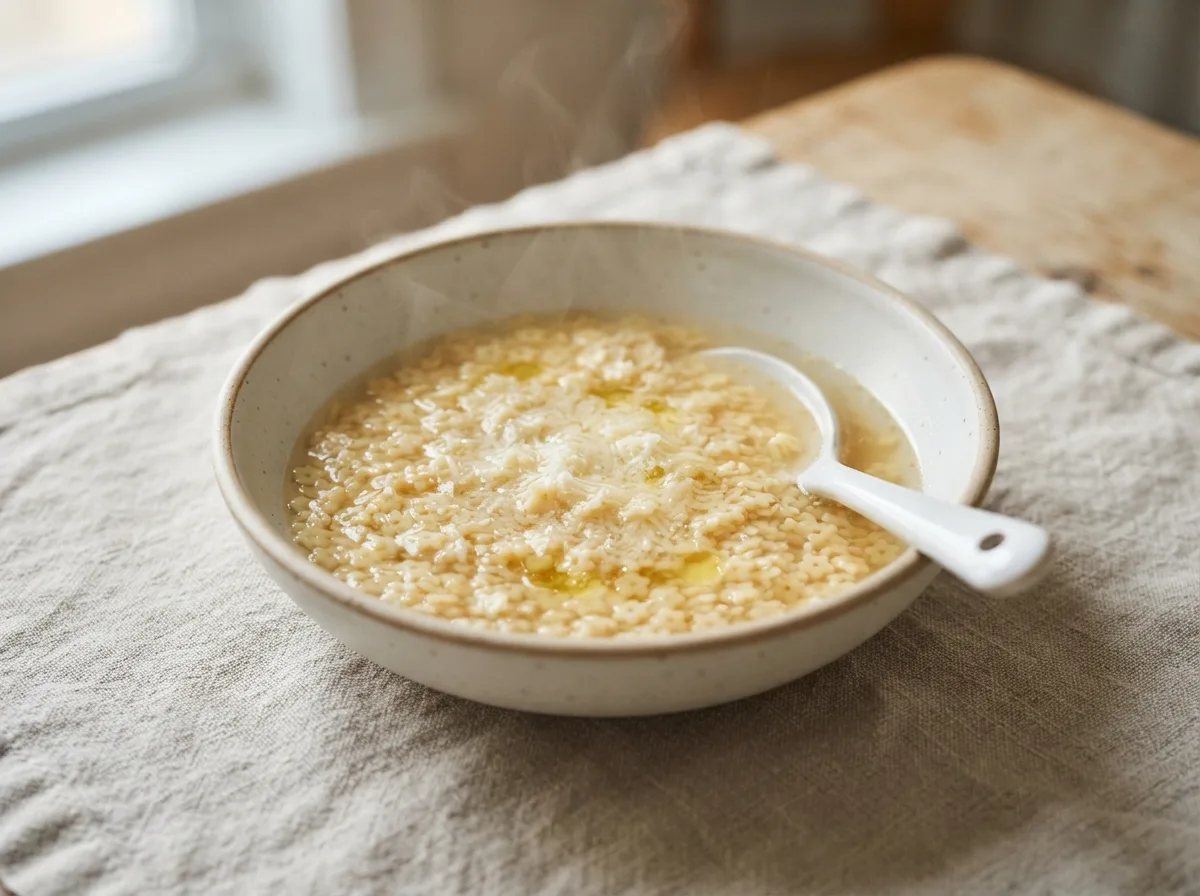
Your dietitian and clinical team know your personal digestive needs; this book knows how to make the food delicious. Cook something small first—a mug of soup or a warm bowl of pastina. Notice that it tastes wonderful. Then turn the page.
How to use this book
Every recipe is laid out across two facing pages. The left page gives you the photograph, the dish's background, and key badges. The right page gives you the ingredients, the method, and three practical boxes. If you only ever read the right-hand page, you will still cook the dish perfectly.
The badges
Effort:Easy means one or two pans on an exhausting day. Medium needs a little attention (like sieving a mash). Involved is saved for days when you have energy to spare.
Time: Active hands-on time alongside total time until it hits the table.
Serves: Generously sized for one or two, with clean scaling guidance.
Suits: Highlights what the dish is best for—such as resting a sensitive gut, managing a stoma, thickening output, or gentle recovery.
Quick tags: Instant notes on freezing, batch cooking, high protein, and vegetarian options.
The three boxes
Make it more nourishing: Practical ways to boost energy and protein without piling more food onto your plate.
Watch-points: The non-negotiable prep rules that keep the meal gentle: peel this, sieve that, lift out the ginger.
Swaps: Substitutions that genuinely work without upsetting your stomach.
Practical prep
Ingredients are listed in order of use with preparation included upfront—so "1 carrot, peeled and cut into 5 mm dice" tells you what to do before the stove is lit. Stock is always strained completely smooth.
The chapters ahead explain the diet's core logic, how to fortify meals, and how to step back to normal eating when ready.
What a low-fibre diet is, and why it works
Fibre is plant material your body cannot fully digest. In healthy everyday eating, that indigestibility is beneficial—it adds bulk and speeds things along. But when your digestive tract is sensitive, inflamed, or narrowed, high-fibre food is like running sandpaper over a graze.
A low-fibre diet temporarily lowers daily intake to under 10 grams. More importantly, it removes the undigested residue: seeds, skins, pips, husks, and tough stringy fibres that can catch, irritate, or block narrow passages.
Why the pieces matter
Cooked starch and tender proteins break down into a smooth, gentle paste that slides through the gut effortlessly. In contrast, sweetcorn kernels, grape skins, nut fragments, seeds, and mushroom pieces pass through largely intact. When intestinal walls are swollen or delicate, these intact pieces can cause pain, spasms, or blockages.
Removing roughage allows the digestive tract to rest, settle, and heal without mechanical irritation.
When low-fibre eating helps
Resting an irritated gut: When experiencing loose stools, cramping, or gut sensitivity, low-residue food reduces digestive workload and calms transit.
Narrowed or delicate passages: Soft, residue-free food glides through without catching, preventing discomfort and obstruction.
Managing a stoma: Controlling texture and starch types helps thicken loose output and avoids blockages at the stoma opening.
This diet is always a temporary bridge, not a permanent lifestyle. It gives your gut the quiet window it needs before you gradually reintroduce normal foods.
Foods that naturally contain zero fibre
One of the most reassuring principles of this diet is that dietary fibre exists solely in plants. Animal cells have no cell walls, meaning fresh meat, poultry, fish, eggs, dairy, and cooking fats contain zero grams of fibre.
When a hospital leaflet hands you a discouragingly long list of restricted vegetables and grains, it is easy to assume you must live on plain porridge and dry toast. In reality, the protein and dairy foundations of the kitchen are wide open:
Meats and poultry: Fresh chicken, turkey, beef, lamb, pork, and tender mince break down completely without leaving fibrous residue.
Sausages, bacon, and ham: A common source of confusion is whether you can have sausages or bacon. Yes, you can. Pork, beef, and bacon contain zero fibre. Plain pork sausages, chipolatas, and Cumberland bangers are completely gentle. The only watch-point is checking the ingredients label: avoid sausages made with coarse herbs, whole onion pieces, leeks, apples, or wholegrain mustard seeds. If skins feel tough, peel them away or choose skinless sausages. (Two of the most comforting dishes in this book are Bangers and mash with smooth onion gravy and Toad in the hole.)
Fish and seafood: Cod, haddock, salmon, sea bass, tuna, and prawns break into tender, delicate flakes that digest effortlessly.
Eggs: Scrambled with butter, poached, soft-boiled, or baked in a custard—eggs are gentle, high in protein, and leave zero residue behind.
Dairy and fats: Whole milk, double cream, butter, cheddar, parmesan, mozzarella, ricotta, cream cheese, and smooth yoghurt. Pure fats and dairy digest high up in the small intestine, providing essential energy without physical roughage.
Understanding that zero-fibre foods form a rich, comforting palette transforms the diet from an ordeal of restriction into an opportunity for soothing, delicious home cooking.
What this diet is not
It is not bland: Flavour comes from strained stocks, melted cheese, garlic-infused oils, soy sauce, citrus juice, miso, and gentle herbs.
It is not low-fat: Butter, olive oil, cream, and cheese digest easily high up in the digestive tract, delivering crucial energy without leaving behind residue.
It is not for weight loss: When digestion is compromised, maintaining strength and weight is the priority.
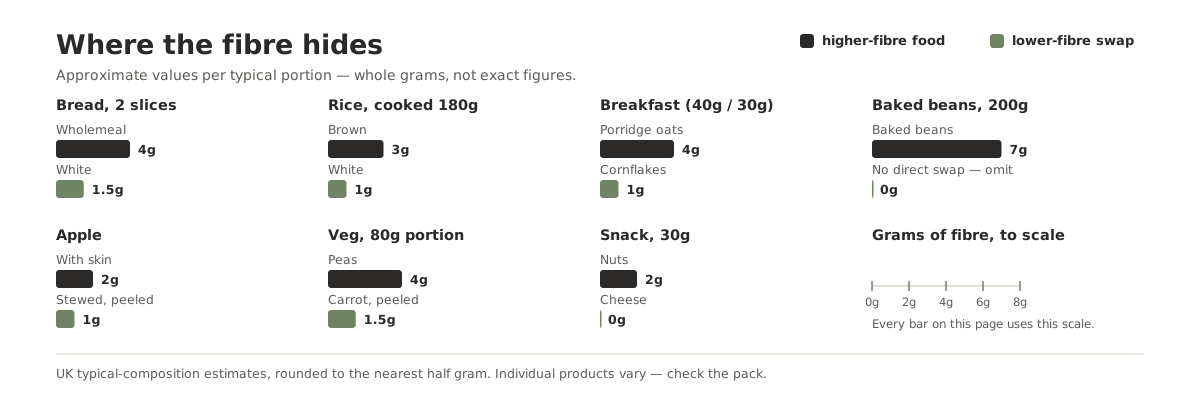
Approximate values per typical portion — whole grams, not exact figures.
higher-fibre food
lower-fibre swap
Bread, 2 slices
Wholemeal
4g
White
1.5g
Rice, cooked 180g
Brown
3g
White
1g
Breakfast (40g / 30g)
Porridge oats
4g
Cornflakes
1g
Baked beans, 200g
Baked beans
7g
No direct swap — omit
0g
Apple
With skin
2g
Stewed, peeled
1g
Veg, 80g portion
Peas
4g
Carrot, peeled
1.5g
Snack, 30g
Nuts
2g
Cheese
0g
Grams of fibre, to scale
0g
2g
4g
6g
8g
Every bar on this page uses this scale.
UK typical-composition estimates, rounded to the nearest half gram. Individual products vary — check the pack.
The rules, and the principle behind them
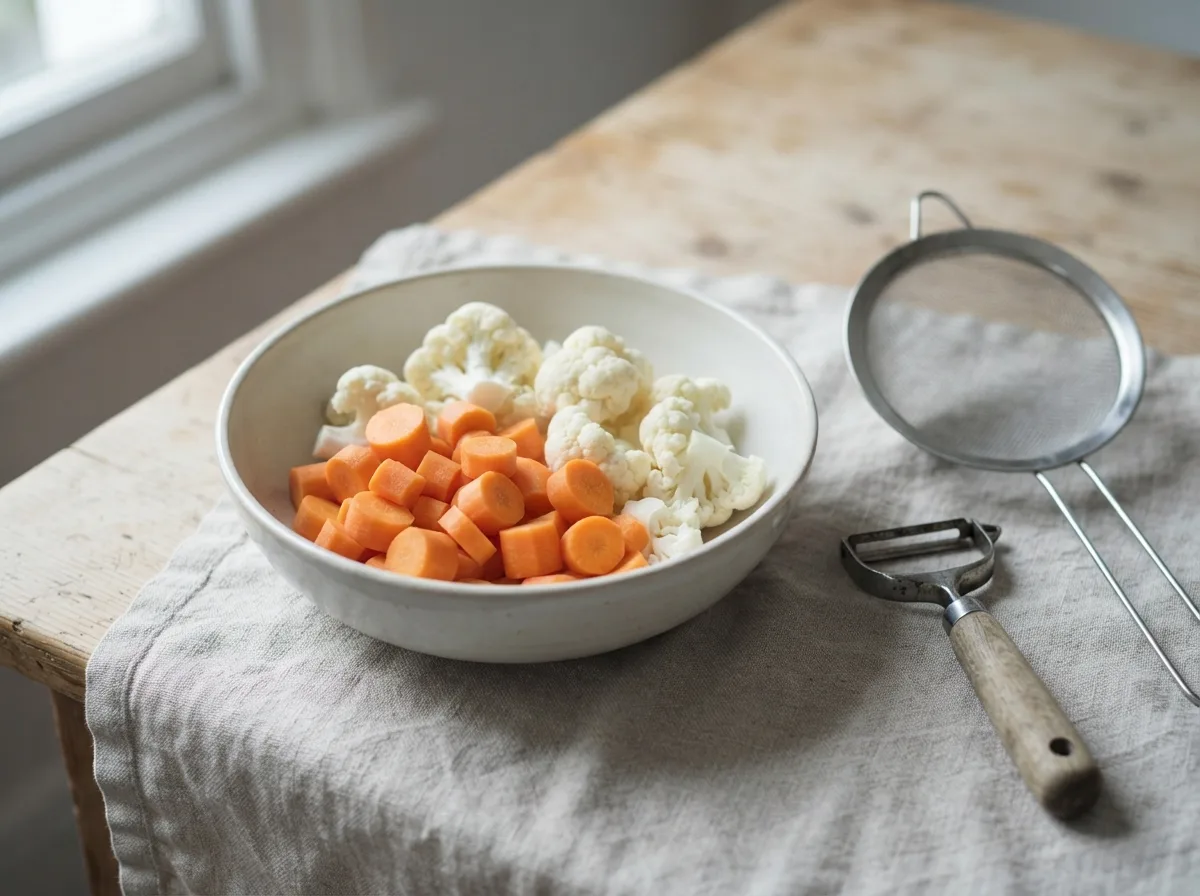
Most leaflets give two rigid columns: allowed and to avoid. In reality, food isn’t that binary. A raw carrot with skin on snaps and leaves rough residue behind. The same carrot, peeled, diced, and simmered until completely tender, digests effortlessly. Cauliflower stalk is fibrous; soft tender florets are gentle.
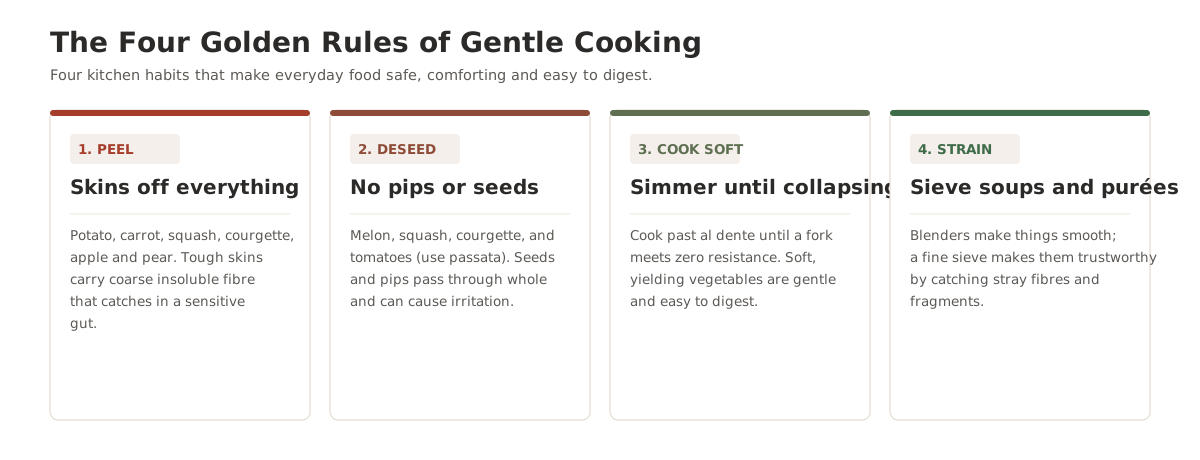
The secret lies in preparation. Four simple habits transform everyday cooking into gentle, safe nourishment.
Four kitchen habits that make everyday food safe, comforting and easy to digest.
1. PEEL
Skins off everything
Potato, carrot, squash, courgette,
apple and pear. Tough skins
carry coarse insoluble fibre
that catches in a sensitive
gut.
2. DESEED
No pips or seeds
Melon, squash, courgette, and
tomatoes (use passata). Seeds
and pips pass through whole
and can cause irritation.
3. COOK SOFT
Simmer until collapsing
Cook past al dente until a fork
meets zero resistance. Soft,
yielding vegetables are gentle
and easy to digest.
4. STRAIN
Sieve soups and purées
Blenders make things smooth;
a fine sieve makes them trustworthy
by catching stray fibres and
fragments.
The three groups
We divide foods into three intuitive categories:
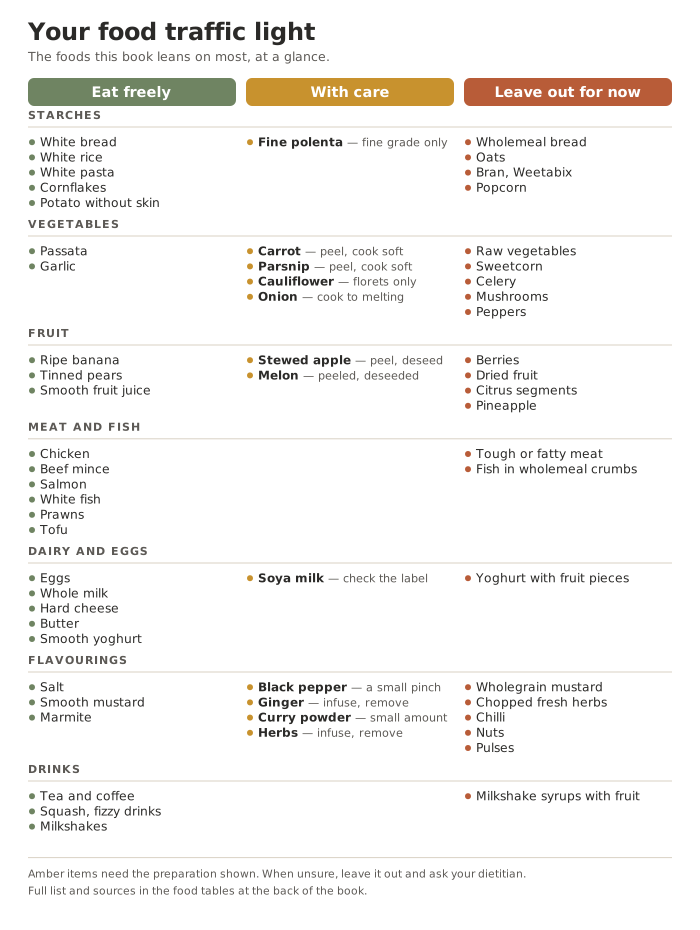
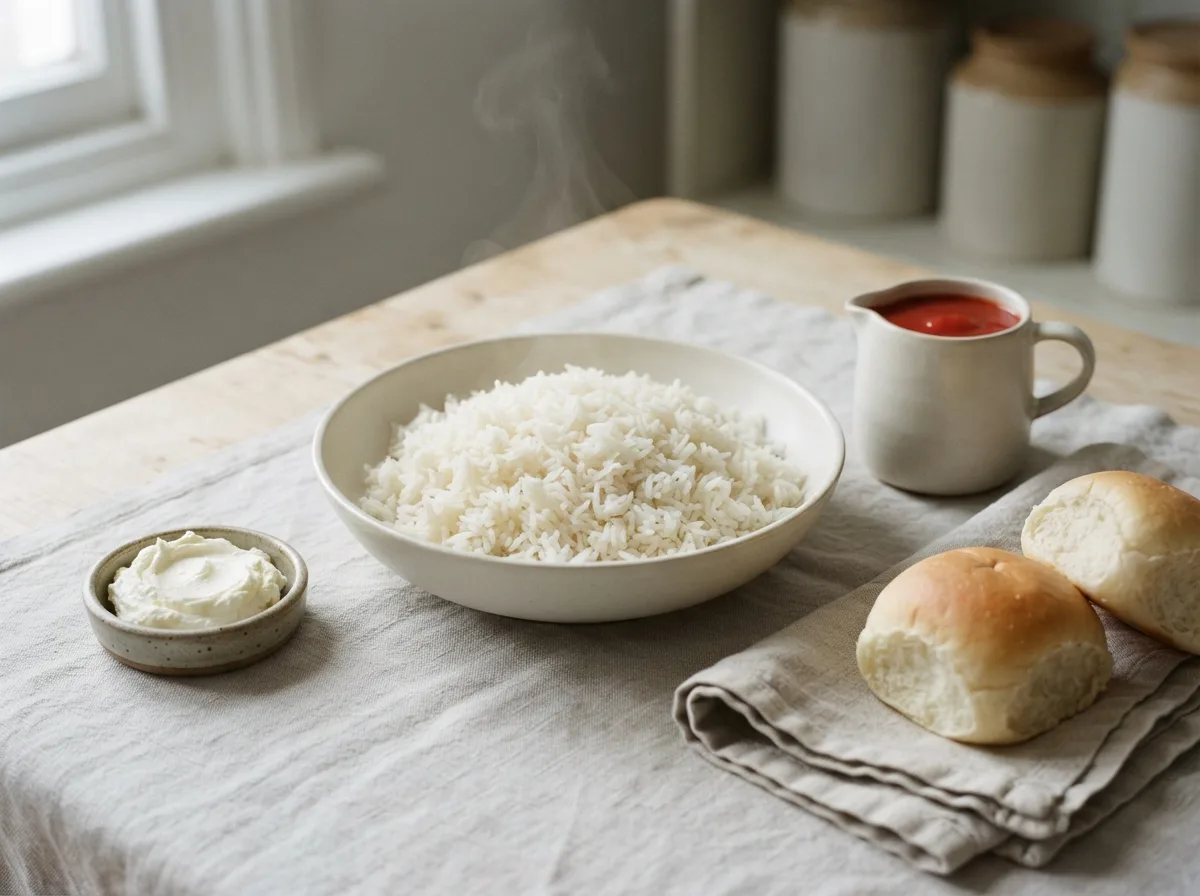
Eat freely (Green): Low-residue foods that leave almost nothing behind. White bread, white rice, pasta, peeled potatoes, tender meat and poultry, plain sausages (no herb or onion pieces), bacon, ham, fish, eggs, tofu, milk, butter, cream, mild cheeses, smooth yogurt, passata, ripe bananas, tinned peaches, and clear stocks.
With care (Amber): Foods that become gentle only when prepared properly. Peeled and softened root vegetables, deseeded courgette and butternut squash, tender broccoli and cauliflower florets (no stalks), melting onions strained or blended, stewed peeled apples, and well-infused herbs lifted out before serving.
Leave out for now (Red): Foods that leave coarse pieces or fibrous residue. Wholemeal bread and brown grains, nuts, seeds, peanut butter, beans, lentils, sweetcorn, celery, mushrooms, raw salads, citrus pith, dried fruit, fruit skins, berry seeds, and gristly meat.
Amber items need the preparation shown. When unsure, leave it out and ask your dietitian.
Full list and sources in the food tables at the back of the book.
Five key kitchen habits
White over brown: Choose white bread, white pasta, white rice, and plain crackers. Check labels on flatbreads and panko.
Peel and deseed: Strip skins from root veg, squash, apples, and fish. Scoop seeds clean out of courgettes and melons.
Cook past al dente: Simmer vegetables until they yield completely to the back of a fork. If a piece still holds its crisp structure, it needs longer.
Sieve what you blend: Blenders break pieces down, but a fine mesh sieve guarantees no stray skins or fibres slip through into soups and purées.
Chew thoroughly: Eat without rushing. Chewing mechanically breaks down food so your stomach and bowel don't have to work hard. Your teeth are the best sieve you own.
Where the experts disagree
If you compare hospital leaflets across different regions, you will quickly spot contradictions. One clinic allows dried oregano and ground cinnamon; another bans all herbs and spices. One recommends porridge as a gentle breakfast; another puts oats firmly on the avoid list. Cauliflower florets are allowed in one city and forbidden in another.
This is not carelessness. It reflects differences in local clinical guidelines and individual tolerance. Where advice diverges, this book defaults to the safer, stricter rule, then notes in the recipe's Watch-points where other guidelines are more relaxed.
Five kitchen borderlines
Herbs and spices: Some guidelines avoid them entirely; others allow mild seasoning. We infuse whole aromatics—a sprig of thyme, a bay leaf, a coin of ginger—into warm stocks or sauces and lift them out before serving. You get rich flavour with zero residue.
Broccoli and cauliflower: Tough stalks are always out, but tender, softly simmered florets are accepted by many dietitians. We use florets cooked until completely yielding.
Oats: Excluded during strict low-fibre phases because of fibre content, yet occasionally recommended to thicken high stoma output. We rely on semolina, cornflakes, and white rice by default.
Smooth peanut butter: Banned by the strictest leaflets, but allowed by others as an effortless calorie booster. Check with your dietitian—if allowed, it makes an excellent spread on white toast.
Milk and lactose: Milk is a cornerstone of gentle nourishment and fortification. However, if your gut is acutely irritated, lactose can sometimes loosen stools. If that happens, simply substitute lactose-free milk and yogurt.
How to navigate the grey areas
Take this short list to your next dietitian appointment. Ask about the one or two items that matter most to you—usually peanut butter, mild spices, or porridge. Whatever your team approves outranks this book. For everything else, our gentle defaults have you covered.
Eating enough
Every standard healthy-eating rule—less fat, less sugar, heaps of roughage—is temporarily turned upside down. When your digestive tract is recovering and your appetite is fragile, your body needs concentrated energy and protein in every mouthful. Butter, cream, cheese, and rich broths are not indulgences; they are essential nourishment.
Maintaining muscle and weight keeps your strength up and speeds healing. Because low-fibre eating excludes high-calorie staples like nuts and beans, you have to pack calories into what remains.
Little and often
Forget the tyranny of three square meals. A heaped plate when you feel fragile defeats your appetite before the first bite. Aim instead for five or six small bites across the day:
A mug of rich chicken and rice broth.
Hot white toast with generous butter and Marmite.
A small dish of warm rice pudding.
A cup of pastina simmered in bone broth with parmesan.
Keep nourishing snacks within arm's reach and eat whenever you feel the urge, regardless of the clock.
The fortification ladder
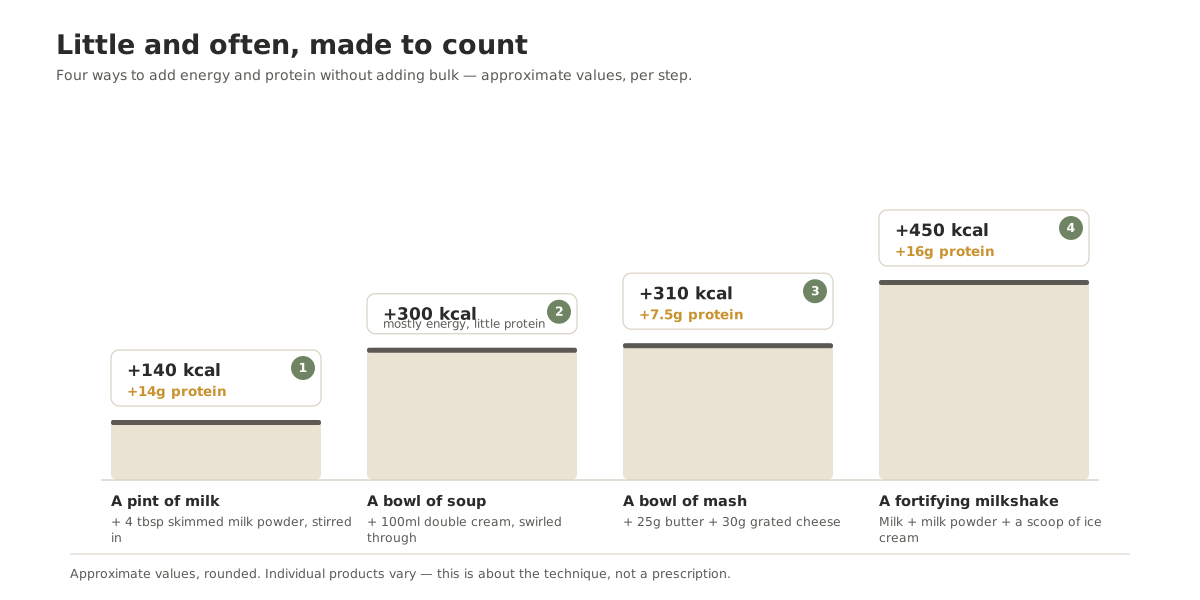
Fortification means boosting the energy and protein in your food without adding daunting volume.
Four ways to add energy and protein without adding bulk — approximate values, per step.
+140 kcal
+14g protein
1
A pint of milk
+ 4 tbsp skimmed milk powder, stirred
in
+300 kcal
mostly energy, little protein
2
A bowl of soup
+ 100ml double cream, swirled
through
+310 kcal
+7.5g protein
3
A bowl of mash
+ 25g butter + 30g grated cheese
+450 kcal
+16g protein
4
A fortifying milkshake
Milk + milk powder + a scoop of ice
cream
Approximate values, rounded. Individual products vary — this is about the technique, not a prescription.
Fortified milk: Whisk 2 to 4 tablespoons of skimmed milk powder into a pint of whole milk. Keep it in the fridge and use it in tea, sauces, custards, and shakes.
Butter & oil: Melt extra butter into mash, white rice, pasta, or scrambled eggs.
Cream & cheese: Stir double cream into soups; fold grated Cheddar or Parmesan into white sauces.
Egg yolk: Whisk a raw egg yolk into hot, off-the-heat broth for instant silkiness and protein.
The low-fibre plate
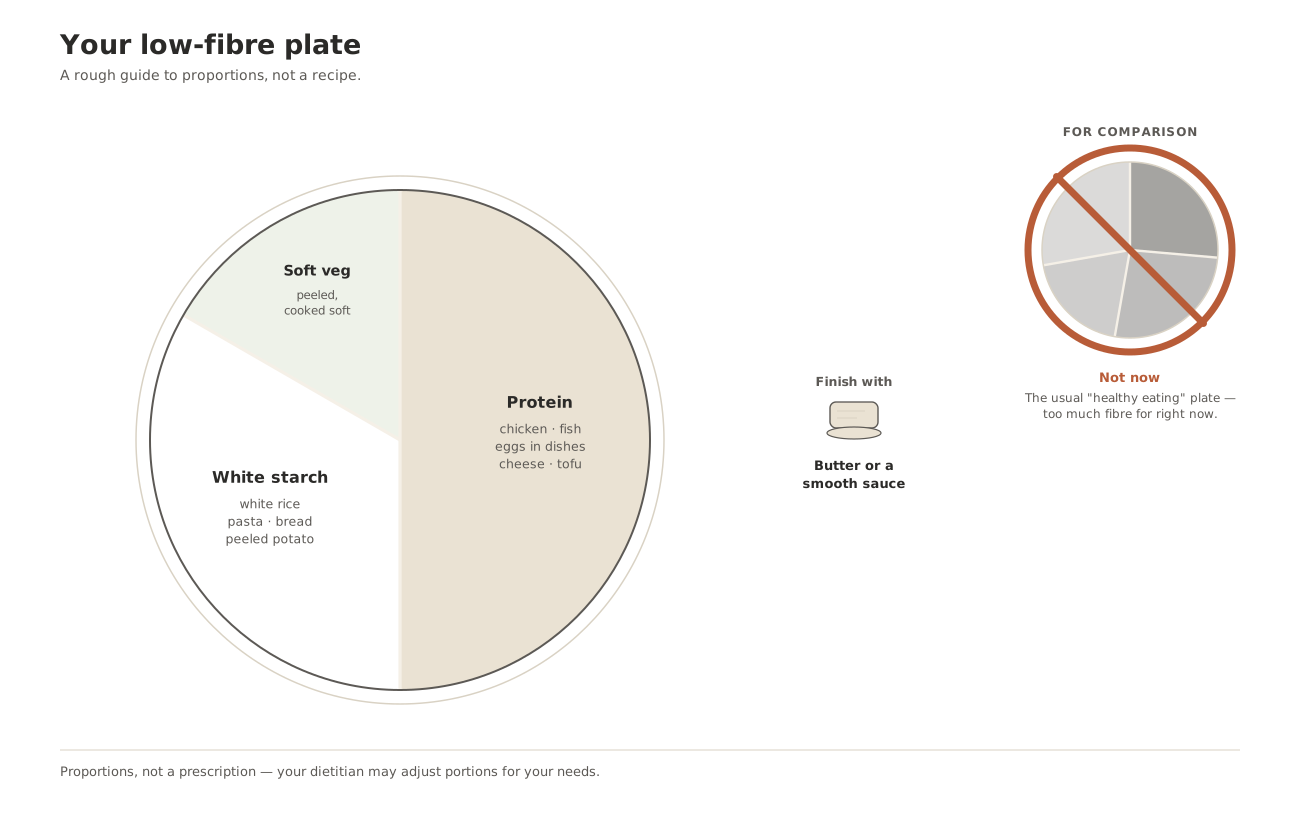
When you feel up to a sit-down meal, balance your plate in four simple steps:
Protein first: Tender chicken, flakey fish, soft eggs, or tofu.
Smooth white starch: Mashed potato, jasmine rice, or white pasta.
One tender vegetable: Soft-cooked peeled carrot, courgette, or butternut squash.
Rich sauce: Gravy, cheese sauce, or parsley butter to keep food moist and easy to swallow.
Proportions, not a prescription — your dietitian may adjust portions for your needs.
Managing sluggish digestion
Because fibre normally keeps the bowel moving, a low-residue diet—often paired with pain relief medications—can cause constipation.
Do not reach for bran or bulk-forming fibre supplements; in a sensitive or narrowed gut, bulk can worsen discomfort or cause a blockage. Instead, drink plenty of fluids, enjoy gentle warm drinks, and speak to your doctor or dietitian about gentle stool softeners. If you stay on a low-fibre diet for more than a few weeks, ask your clinical team about a suitable multivitamin.
Stepping back up to normal eating
A low-fibre diet is a temporary bridge, not a lifetime sentence. Once your digestive system has had time to rest, settle, and recover, the goal is to gradually reintroduce fibre for long-term gut health.
Most people begin stepping back up after four to six weeks, guided by their healthcare team.
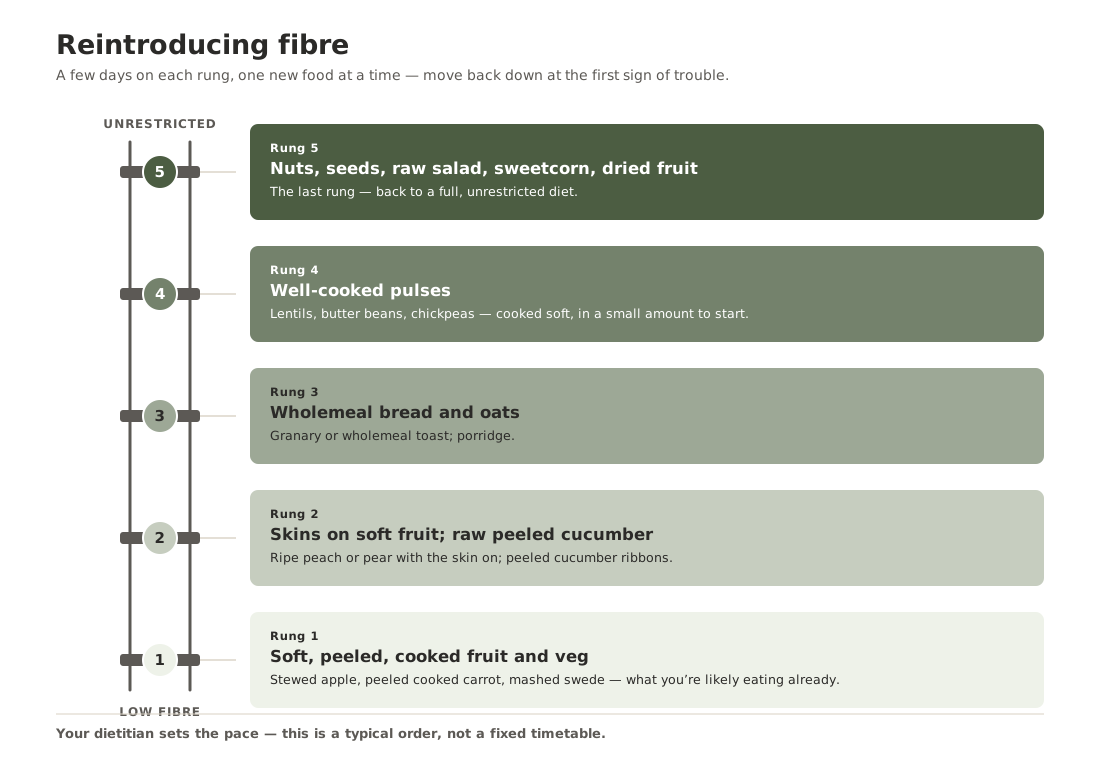
The reintroduction ladder
Reintroducing fibre works best in four distinct stages, moving from soft and gentle textures to dense, fibrous foods:
Reintroduce only one new food at a time. Eat a small portion and wait two to three days before adding another.
Keep a simple notebook by the kettle to record what you ate and how you felt. If a food causes cramps, bloating, or loose stools, take note:
Step back to the previous safe stage for two to three days until your gut settles.
Try that food again in a few weeks, cooked softer or in a smaller portion.
Recipes worth keeping
When low-fibre eating is in your rearview mirror, you don't have to abandon these dishes. Chicken and ginger congee, silky risottos, velvety strained vegetable soups, and slow-baked rice puddings are beloved worldwide because they are delicious, comforting food.
Keep the dishes that brought you comfort, and leave the restrictions behind.
The larder, the swaps, and a week of meals
Cooking well on a low-fibre diet begins with shopping. When your cupboards are stocked with the right gentle staples, an exhausting evening produces a bowl of comforting pastina in rich broth rather than dry toast.
The gentle larder
The cupboard: White pasta (short shapes and tiny pastina), jasmine rice, risotto rice, smooth passata, good clear stock cubes, tinned pears and peaches in juice, seedless jam, honey, and Marmite.
The secret booster: Skimmed milk powder. Whisked into whole milk, it doubles the protein without changing the taste.
The fridge: Whole milk, unsalted butter, double cream, Cheddar, Parmesan, and eggs.
The freezer: Sliced white bread (which toasts straight from frozen) and single portions of soups, stews, and sauces made on better days.
The swaps that matter
You don't need to reinvent your cooking—just make smart, like-for-like swaps that remove skins, seeds, and coarse husks while preserving comfort and flavour.
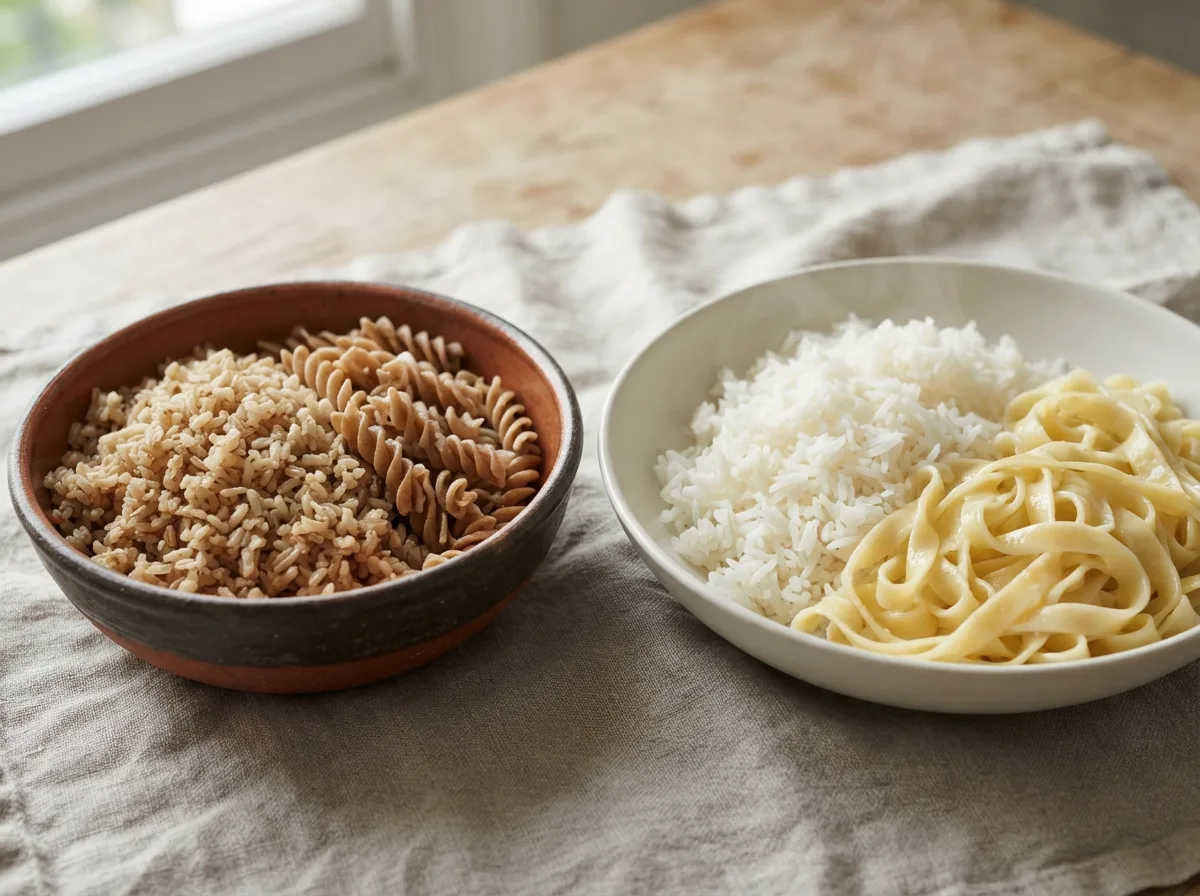
Brown rice & wholemeal pasta → White rice & white pasta: White grains lack tough outer bran; they cook soft and digest effortlessly.
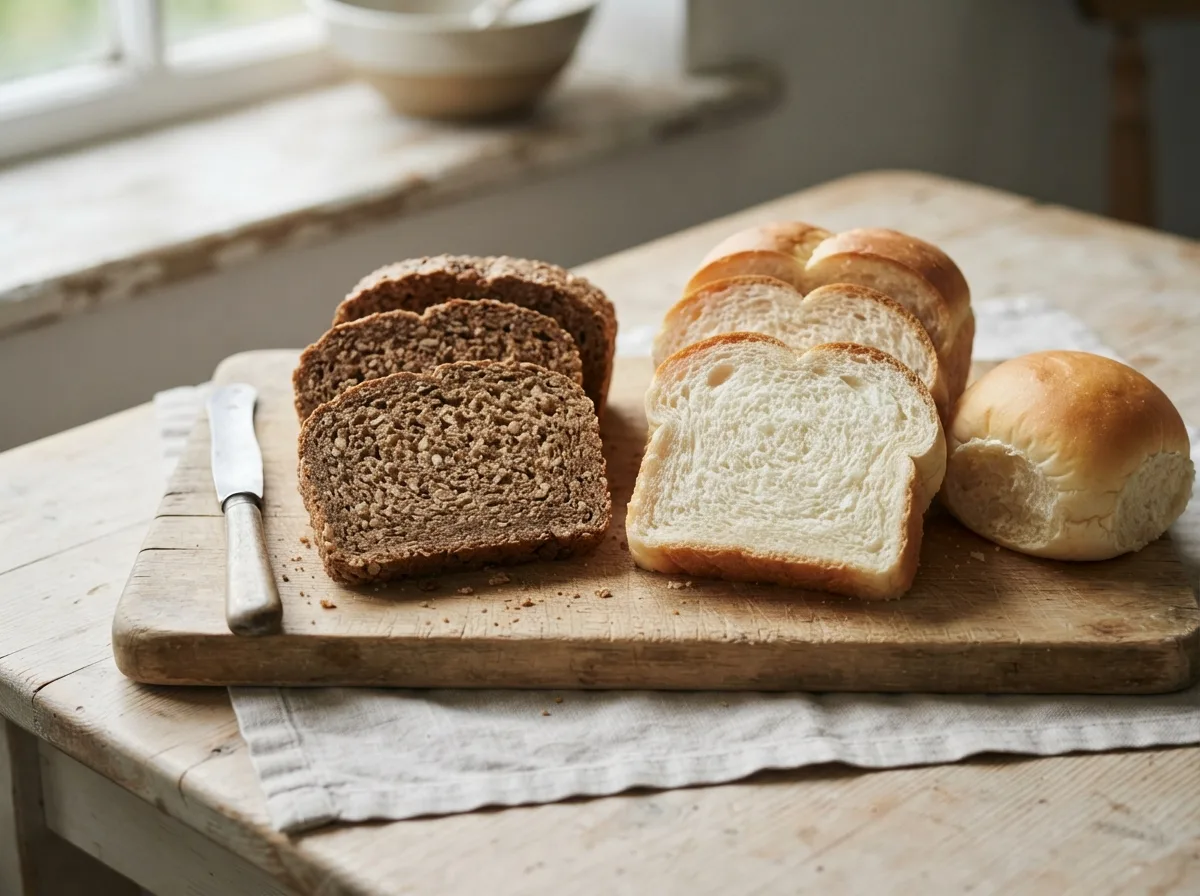
Seeded & granary bread → Soft white bread, brioche & pitta: Cuts out coarse grains, seeds, and rough husks entirely.
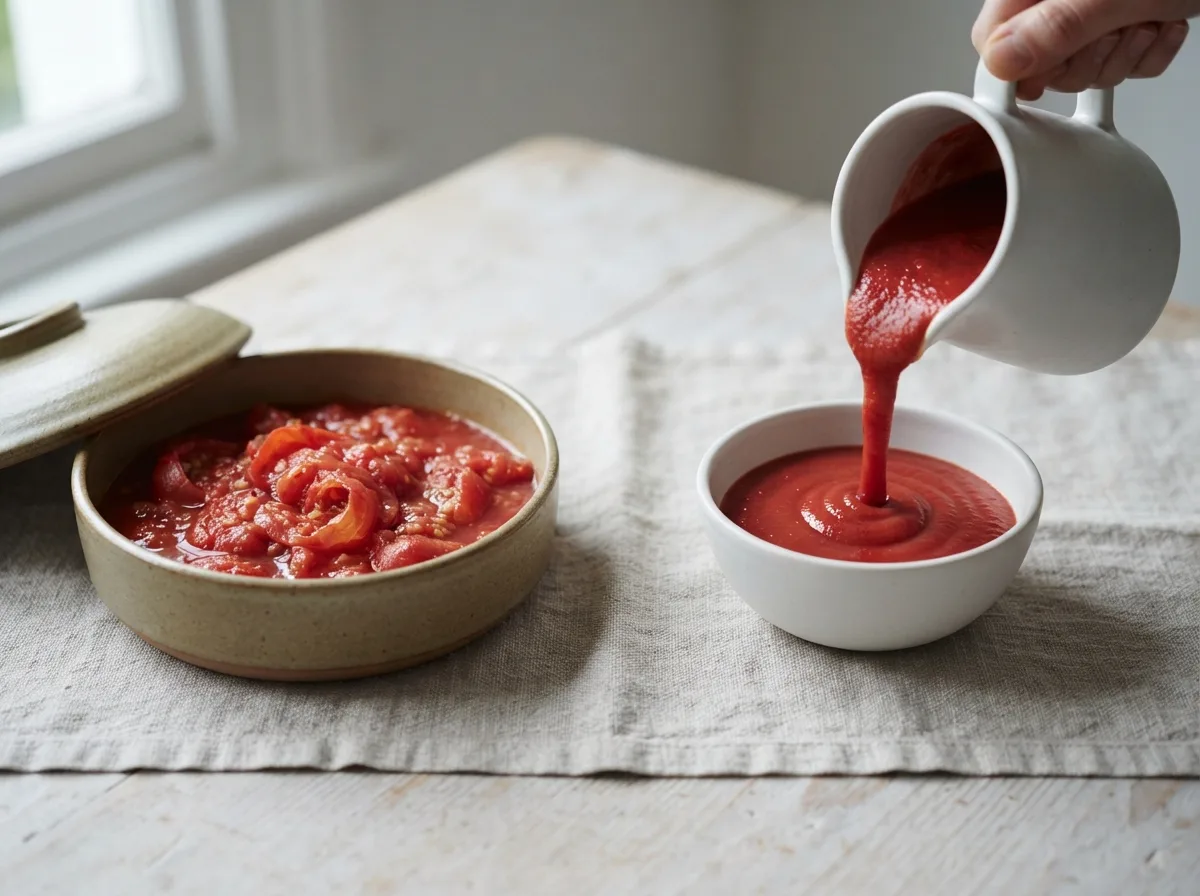
Tinned chopped tomatoes → Sieved passata & tomato purée: Retains full savoury depth while filtering out curled skins and hard seeds.
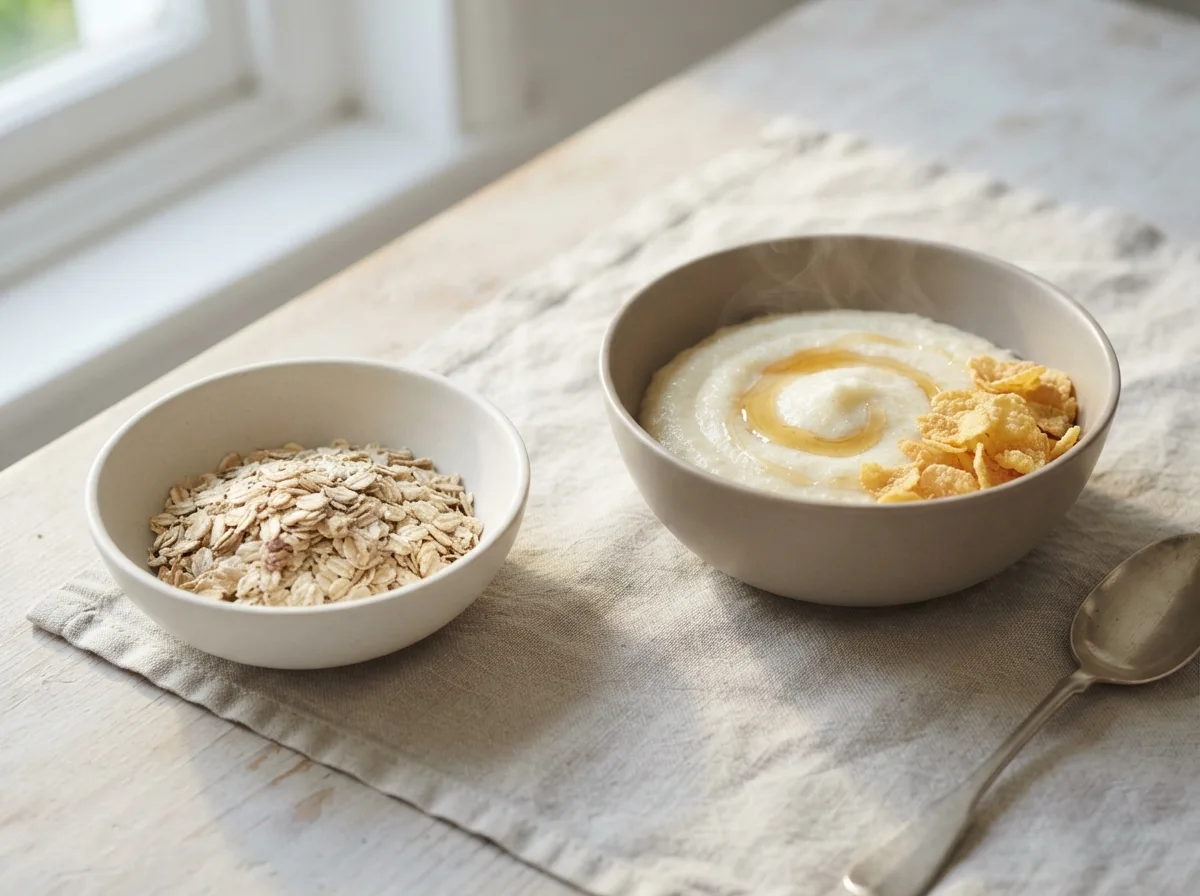
Porridge oats & coarse muesli → Fine semolina, cornflakes & rice cereals: Smooth morning comfort with none of the fibrous chew.
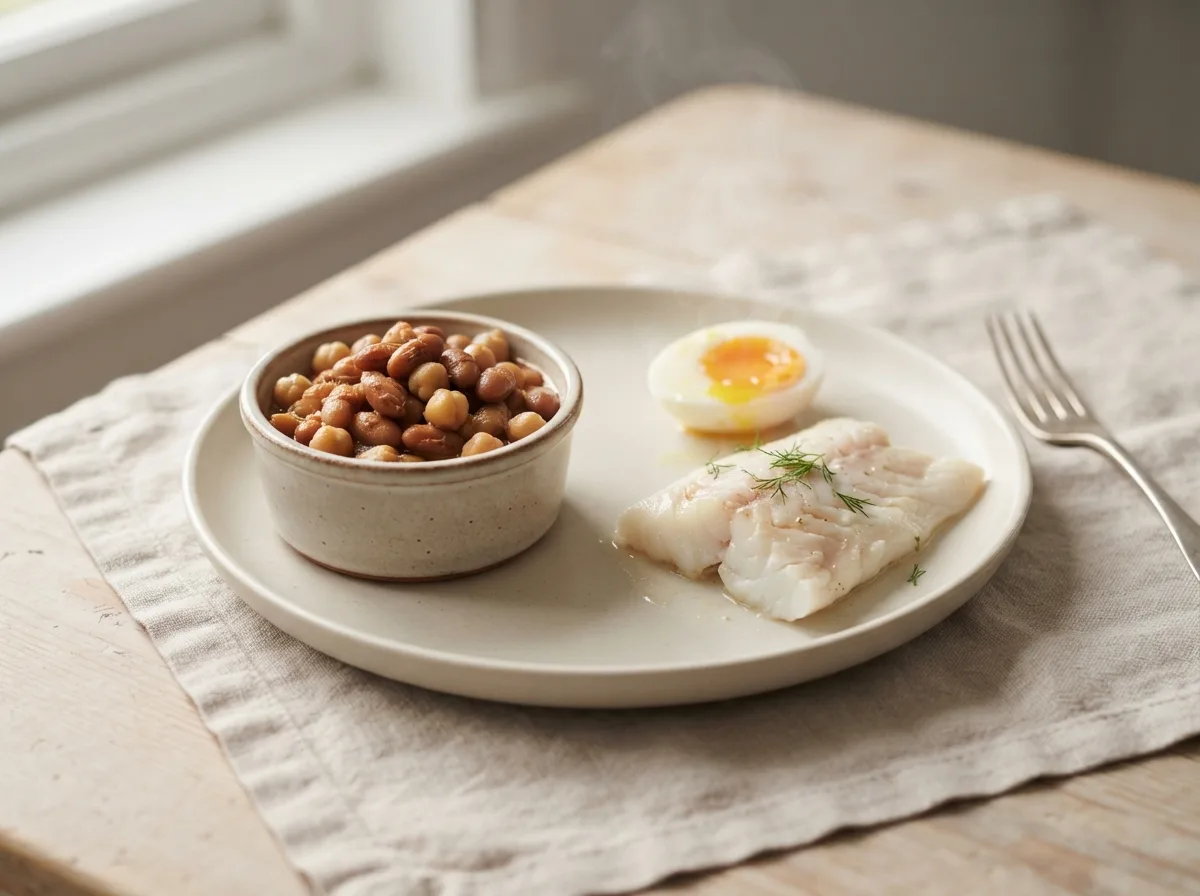
Beans, lentils & chickpeas → Tender chicken, fish, eggs & cheese: Nutrient-dense proteins that digest cleanly without legume skins.
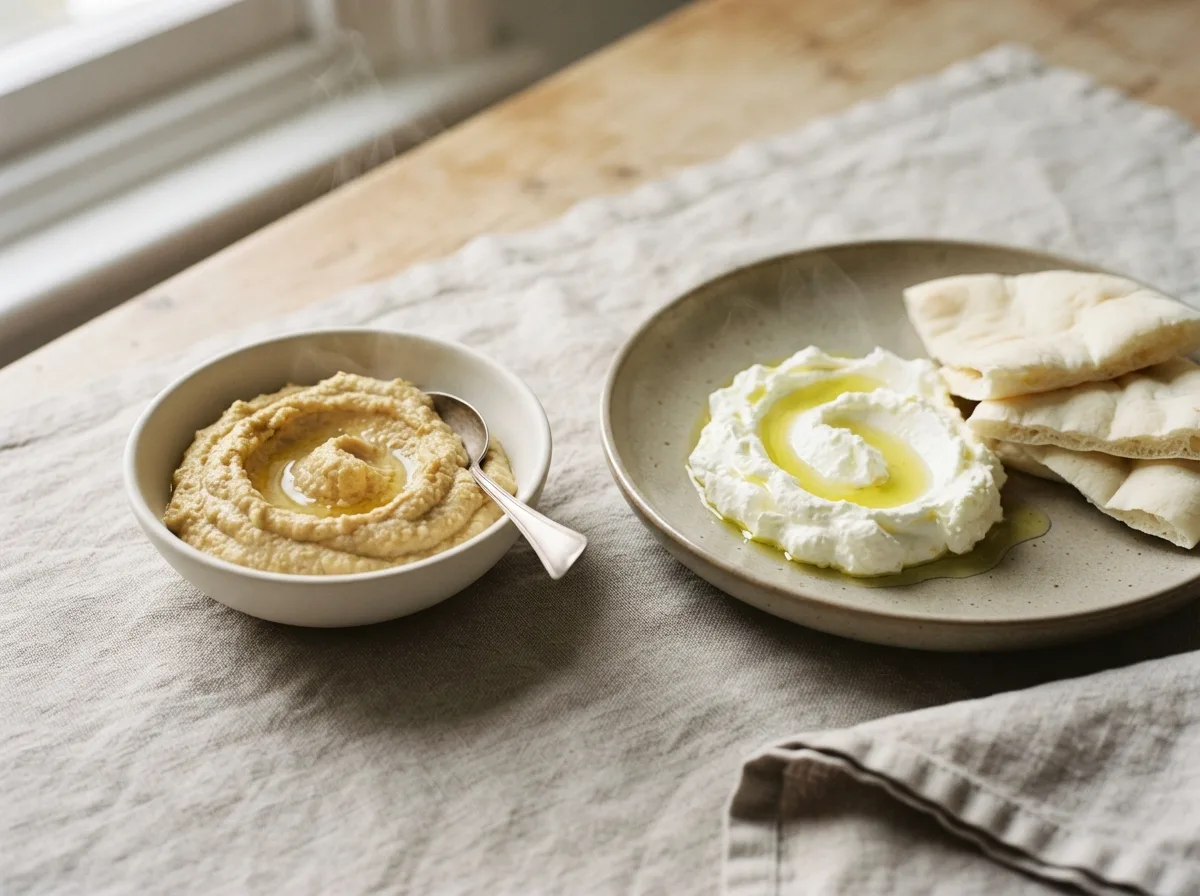
Hummus & nut spreads → Whipped feta & smooth cream cheese: Savoury richness without indigestible chickpea skins or nut fragments.
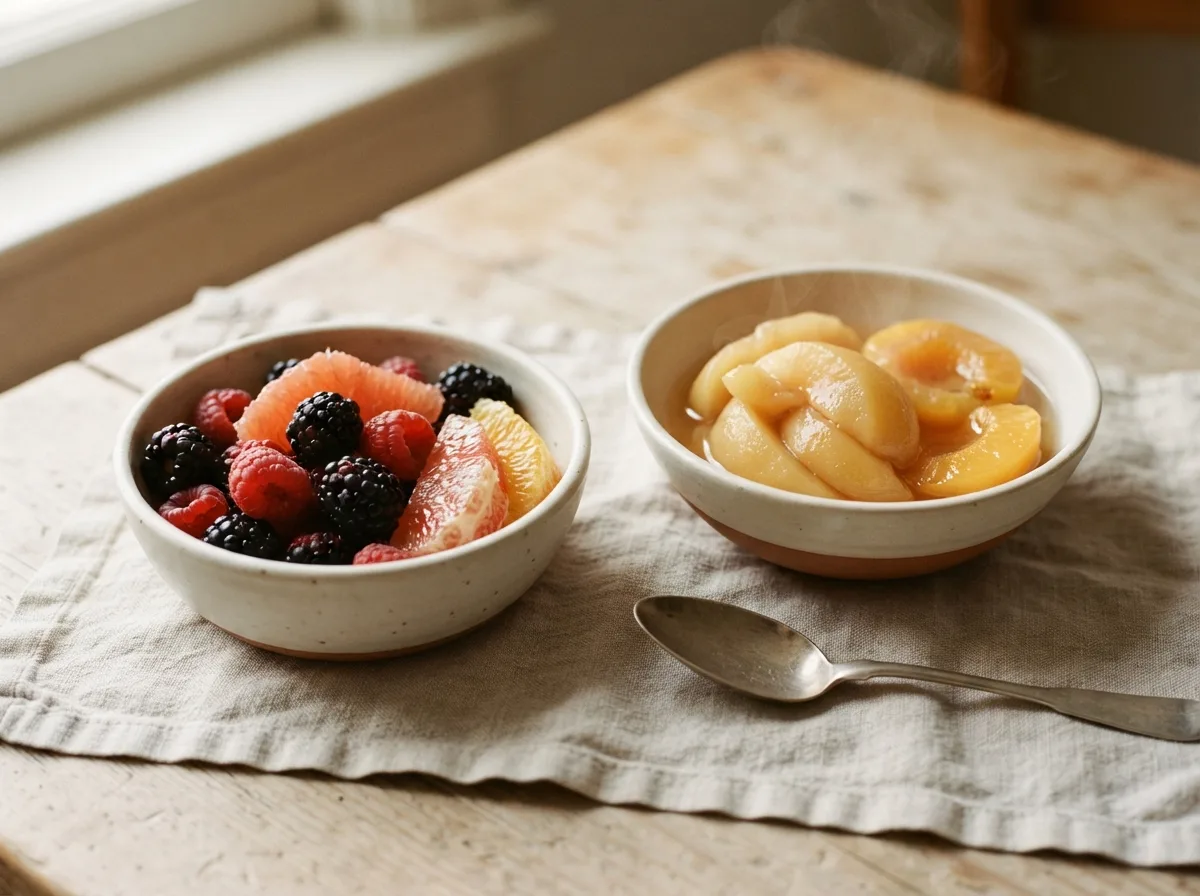
Berries & citrus segments → Stewed peeled apple & tinned peaches: Sweet, tender fruit with zero pips, seeds, or stringy pith.
A week of gentle meals
Four straightforward cooking sessions can easily carry you through seven days.
A blank weekly grid to fill in and photocopy — the Monday column shows a filled-in example.
Mon
Tue
Wed
Thu
Fri
Sat
Sun
Breakfast
Lunch
Dinner
pancakes
pastina
in brodo
teriyaki
salmon
Shopping list
1.
2.
3.
4.
5.
6.
7.
8.
Photocopy this page before you start — one grid per week, so nothing has to be remembered.
Monday: Golden white toast. Silky butternut soup with a swirl of cream for lunch (freeze half). Comforting cottage pie with mashed potato for dinner.
Tuesday: Warm semolina with stewed apple. Crustless grilled cheese for lunch. Reheated cottage pie for dinner.
Wednesday: Fluffy buttermilk pancakes with warm tinned pear. Pastina in chicken broth for lunch. Chicken and ginger congee for dinner.
Thursday: Buttered brioche with peaches. Leftover congee for lunch. Creamy spaghetti carbonara for dinner.
Friday: Ripe banana with smooth yogurt and honey. Monday's frozen soup for lunch. Teriyaki salmon with steamed jasmine rice for dinner.
Saturday: Bagel with cream cheese. Whipped feta with warm flatbread. Saffron risotto for a quiet evening.
Sunday: Marmite toast fingers. Tender roast chicken thighs with gravy and mash. Simmer the chicken bones into clear golden stock for the week ahead.
Always keep an escape route: on days when cooking feels impossible, a fortified milkshake or a warm mug of broth is a complete, respectable meal.
Visual Culinary Showcase
The Swaps That Matter: Side by Side
Every swap replaces coarse fibres, seeds, or tough outer skins with gentle, soothing alternatives that digest effortlessly. Look for the high-fibre product on the left, and its gentle replacement on the right.
✕ Replaced (Left)✓ Gentle Swap (Right)
Grains & Bakery
Brown Rice & Wholemeal Pasta ➔ White Basmati & Buttered Pasta
✕ ReplaceBrown rice & wholemeal pasta
➔
✓ Use insteadFluffy white basmati & buttered white pasta
Why it works: Brown grains retain the fibrous outer bran and germ which resists digestion. White grains cook completely tender and digest smoothly with zero residue.
💡Kitchen tip: Cook white pasta a minute past al dente until thoroughly soft and yielding.
✕ Replaced (Left)✓ Gentle Swap (Right)
Grains & Bakery
Seeded Granary Loaf ➔ Soft White Bread & Brioche
✕ ReplaceWholemeal, granary & seeded bread
➔
✓ Use insteadSoft white sliced bread, rolls & brioche
Why it works: Whole grains, sunflower seeds, and cracked wheat pass through largely intact. Soft white bread delivers comforting energy with no sharp seeds or husks.
💡Kitchen tip: Keep sliced white bread in the freezer—it toasts straight from frozen without going stale.
✕ ReplaceTinned chopped tomatoes with skins & seeds
➔
✓ Use insteadSmooth sieved passata & rich tomato purée
Why it works: Tomato skins roll into tough scrolls and seeds resist breakdown. Sieved passata delivers concentrated, rich savoury depth with all residue completely removed.
💡Kitchen tip: Simmer passata with a knob of butter and sea salt for a luxurious 10-minute pasta sauce.
✓ Use insteadFine semolina porridge & crisp cornflakes
Why it works: Rolled oats are dense in insoluble flakes. Fine semolina simmered in whole milk creates soothing morning warmth that is exceptionally gentle on digestion.
💡Kitchen tip: Swirl a spoonful of golden honey or stewed peeled apple into your warm semolina.
✕ ReplaceBaked beans, lentils & chickpeas with skins
➔
✓ Use insteadTender poached white fish & jammy soft egg
Why it works: Legume skins cause gas, cramping, and bloating. Fish, tender poultry, and soft eggs break down cleanly, delivering high-density protein for tissue healing.
💡Kitchen tip: Poach haddock or cod in seasoned whole milk, then thicken the poaching milk into a quick sauce.
✕ Replaced (Left)✓ Gentle Swap (Right)
Dairy & Protein
Chickpea Hummus ➔ Velvety Whipped Feta with Olive Oil
✕ ReplaceGrainy chickpea hummus with skins
➔
✓ Use insteadVelvety whipped feta with soft white pitta
Why it works: Chickpeas are excluded across every low-residue guideline. Whipping feta with olive oil and milk creates a rich, savoury dip with zero coarse particles.
💡Kitchen tip: Serve with warm, crustless white flatbread or plain crackers.
✕ Replaced (Left)✓ Gentle Swap (Right)
Produce & Fruit
Seeded Berries & Citrus ➔ Stewed Peeled Apples & Peaches
✕ ReplaceFresh berries with seeds & citrus with pith
➔
✓ Use insteadStewed peeled apples & tinned sliced peaches
Why it works: Berry seeds and citrus pith pass through whole and can catch in delicate linings. Peeled and softly cooked fruit collapses into gentle, sweet comfort.
💡Kitchen tip: Warm tinned peach slices in butter and brown sugar over plain vanilla ice cream.
✕ Replaced (Left)✓ Gentle Swap (Right)
Produce & Fruit
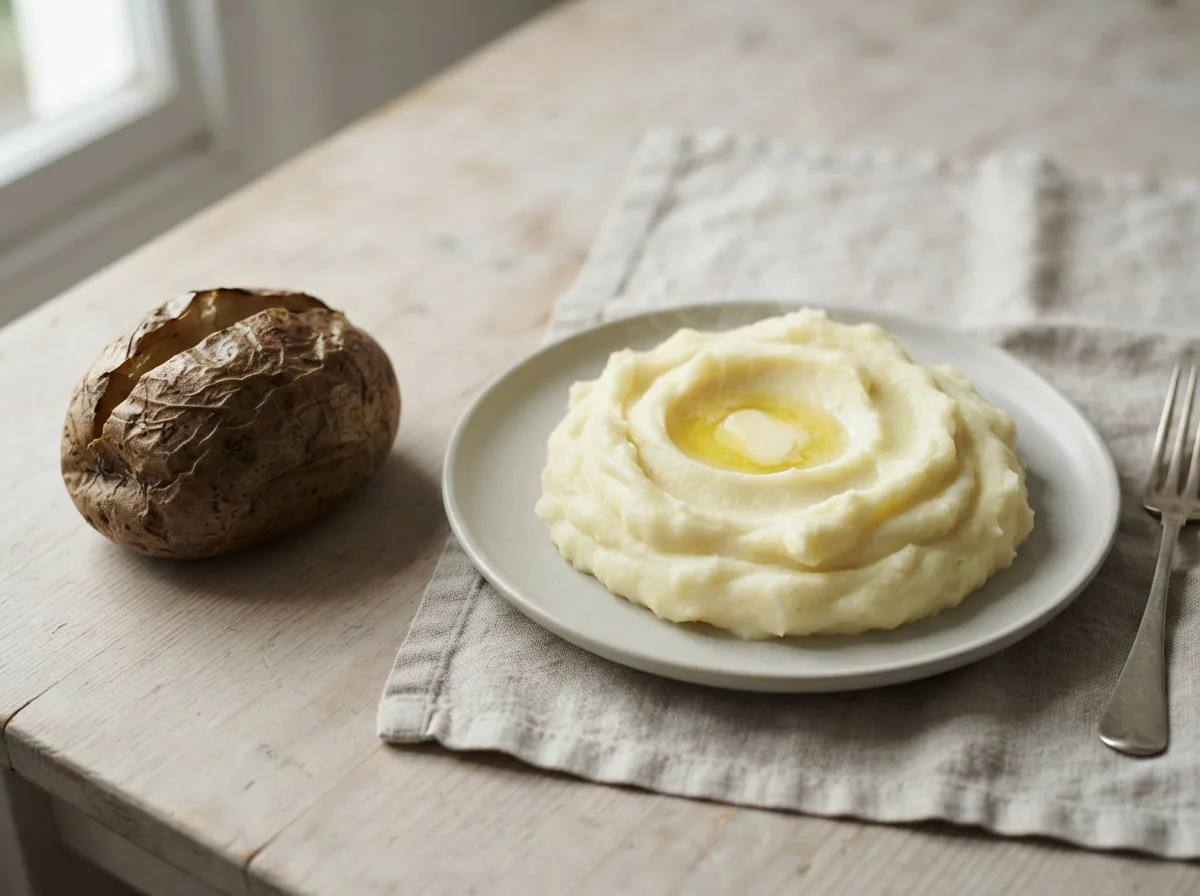
Jacket Potato with Skin ➔ Silky Mash with Melting Butter
✕ ReplaceBaked jacket potato with tough skin
➔
✓ Use insteadSilky peeled mash with melting butter
Why it works: Potato skin is dense insoluble fibre. Peeled potato flesh is pure, easily digestible energy that absorbs butter, cream, and cheese effortlessly.
💡Kitchen tip: Push boiled peeled potatoes through a ricer or fine sieve for restaurant-quality silkiness.
Sources and evidence
This book is built upon Low Fibre Diet (Low Residue Diet), published by the nutrition and dietetics department of an NHS hospital trust, and benchmarked line by line against guidelines from ten other NHS trusts, national bowel health charities, and the British Dietetic Association.
Where sources agree, we follow the consensus. Where they diverge, the chapter Where the experts disagree explains the variations, and individual recipes flag alternative options.
What the evidence shows
Low-fibre dietary guidance is long-established, pragmatic, and mechanically sensible: keeping fibrous skins, seeds, and tough fragments away from narrowed or delicate digestive passages reduces friction and prevents irritation.
However, low-fibre eating is a temporary therapeutic intervention, not a permanent lifestyle. It should always have a defined purpose and an end date, with the goal of returning to varied, fibre-rich foods as soon as your digestive system is ready.
A personal note
These recipes were developed to strict food safety criteria, audited with dietary analysis tools, and thoroughly kitchen-tested. They offer culinary guidance rather than individual clinical prescriptions. If any detail in this book contradicts advice from your personal dietitian or medical team, always follow your team's guidance.