Saffron risotto
The pot that turns from white rice to solid gold
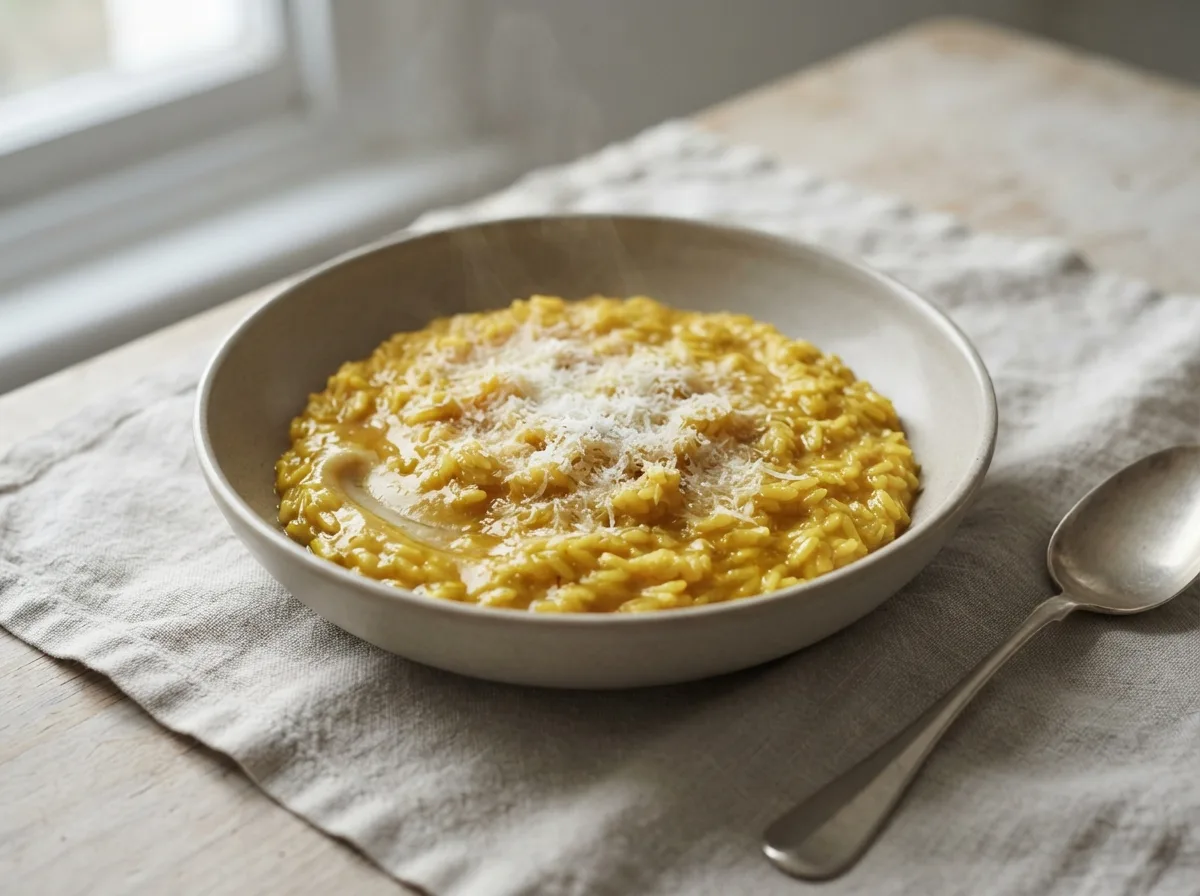
Best made just before you eat it, in this exact quantity. A second batch is quicker to start from scratch than to stretch this one further, since risotto does not wait well once it is made.
Saffron risotto asks for almost nothing beyond patience with a ladle, and it rewards that patience more visibly than most dishes manage. A pinch of thread steeped in a cup of hot stock stains the liquid a deep amber within minutes, and once that ladle goes into the rice everything after it turns the same rich gold, thread by invisible thread, until the whole pot looks lit from within rather than painted. The rice itself follows the rule this book keeps returning to, cooked well past the point most kitchens call it done, until no grain holds any resistance at the centre. Butter and Parmesan beaten in off the heat finish it glossy rather than sticky, and the colour survives every stir that follows.
Ingredients
Contains: Milk, Sulphites, Celery
- 800 mlclear vegetable or chicken stock, clear and strained, or a good stock cube, held at a bare simmer in a pan alongside
- 1 pinchsaffron threads, steeped in a small ladleful of the hot stock before you start
- 70 gunsalted butter, half for the pan, half cold and cubed for the end
- 1shallot, peeled and very finely chopped, to be cooked to melting, or left out entirely — optional
- 170 garborio or carnaroli rice
- 100 mldry white wine
- 60 gParmesan, finely grated, plus a little more to serve
- salt
Method
Warm the stock in a second pan and hold it at a bare simmer beside the one you will cook the rice in. Ladle about 100 ml into a small cup, drop in the saffron threads and leave them to steep, stirring once, until the liquid is a deep amber. Give it 5 minutes.
Melt half the butter in a wide, heavy-based pan over a low heat, then add the shallot if you are using it. Cook for 5 to 6 minutes, stirring often, until it has collapsed to a soft, colourless pulp you can crush against the side of the pan. Go straight on to the rice if you are leaving it out.
Stir the rice into the butter over the same low heat for a minute or two, until the grains are coated and their edges have turned from chalky white to translucent.
Turn the heat up, pour in the wine and stir until the pan smells of nothing but rice and butter again, about 2 minutes.
Pour in the saffron stock and stir until the rice has drawn it in, which turns the pan gold at once. Carry on with the rest of the hot stock, a ladleful at a time, waiting for each one to be almost gone before the next goes in. Expect 18 to 20 minutes. The risotto is ready when the grains are soft the whole way through with nothing firm at the centre, and it spreads slowly across the pan when you tilt it. There may be a ladleful of stock left over, which is no bad thing.
Hot stock keeps the pan at temperature. A cold ladleful stalls the rice and stretches the cooking out.
Take the pan off the heat and beat in the cold cubed butter and most of the Parmesan, hard, until the risotto turns glossy and slackens. Season with salt.
Spoon into two warm, shallow bowls and finish with the last of the Parmesan. The gold dulls as the risotto cools, so carry the bowls to the table as they are.
Watch-points
- Steep the saffron in hot stock until the threads have gone soft and given up their colour, so nothing whole or crunchy reaches the bowl.
- Cook the shallot down to a soft pulp with no colour and no crunch, or leave it out of the pan altogether.
- Let the wine cook away completely before the first stock goes in, so no raw alcohol is left in the pan.
- Cook the rice past any bite at the centre, right through to fully soft.
- Use a stock that is clear and strained, with nothing floating in it.
Some hospitals allow a pinch of saffron steeped into a dish like this; the leaflet this book follows lists spices under foods to avoid. Leave it out if you have been told to, and let the stock alone carry the risotto instead.
Make it more nourishing
- Beat 2 tablespoons of mascarpone in with the Parmesan, which slackens the risotto and adds calories without adding volume.
- Use 80 g of Parmesan rather than 60 g, beaten in over two goes so it melts evenly.
- Drop a further 10 g of butter into each bowl and let it melt into the surface at the table.
Swaps
- Instead of dry white wine, use another ladleful of stock and a teaspoon of white wine vinegar
- keeps the sharp edge the wine gives against the butter, with no alcohol in the pan at all
- Instead of Parmesan, use a vegetarian hard cheese sold as an alternative to Parmesan
- the rennet in true Parmesan is animal, so the vegetarian tag only holds with the substitute