Roast chicken thighs with gravy and mash for two
A small Sunday roast, with nothing on the plate that needs cutting twice
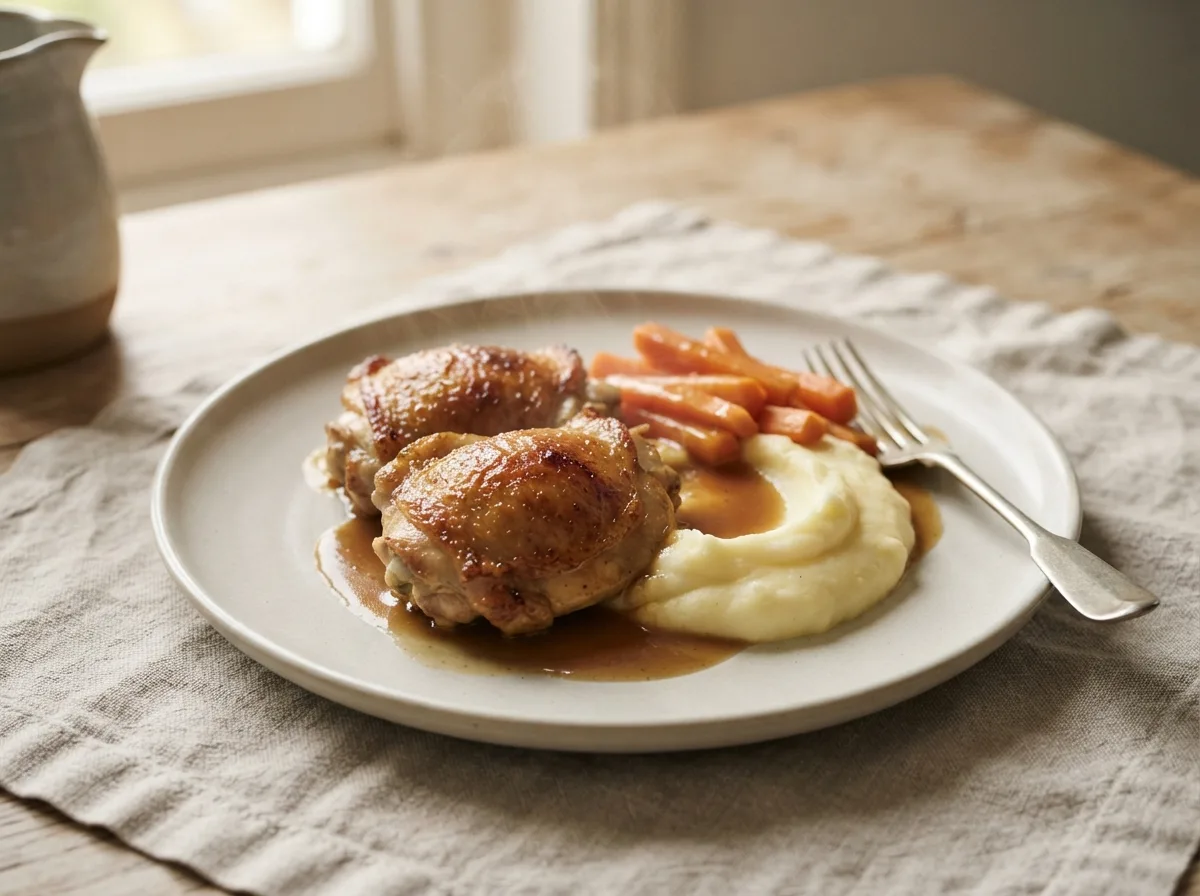
Scales by the thigh. Add two more to the tray and a little more stock to the gravy pan for a third or fourth serving.
A roast dinner is one of the meals people miss most, and the good news is that almost nothing about it needs to change. The skin comes off the thighs before they go in the tin, and a few knobs of butter dotted over the top do the same job of keeping the meat from drying out, while giving the tray something worth turning into gravy. That gravy then gets the one extra step most cooks skip. It goes through a sieve, so nothing but smooth, glossy liquid reaches the plate. The mash gets the same treatment, and the carrots go in small and come out soft enough to crush. None of this takes real skill. It asks you to slow down at two or three points.
Ingredients
Contains: Milk, Celery
- 4chicken thigh fillets, skin removed
- 50 gunsalted butter, 20 g for roasting, 10 g for the carrots, 20 g for the mash
- salt
- 500 gpotato, peeled and cut into even chunks
- 300 gcarrot, peeled and cut into 1 cm dice
- 200 mlclear chicken stock, strained, or a good cube is fine
- 1 tbspcornflour, slaked in a little cold water
- 80 mlwhole milk, warmed
Method
Heat the oven to 190°C fan (210°C). Put the chicken thigh fillets in a small roasting tin, dot with 20 g of the butter and season with salt. Roast for 25 to 30 minutes, until the juices run completely clear when the thickest part is pierced and there is no pink at the centre.
Meanwhile, put the potato chunks in a pan of cold water, bring to the boil and cook for 15 to 18 minutes, until a knife slides in with no resistance.
Put the diced carrot in a separate pan of cold water, bring to the boil and cook for 8 to 10 minutes, until a piece crushes against the side of the pan with no resistance. Drain, toss with 10 g of the butter and cover the pan to keep them warm.
Once the chicken is out of the oven, lift it onto a warm plate to rest. Pour the tray juices into a small pan, add the stock and bring to a simmer.
Stir the slaked cornflour into the simmering gravy and cook for 2 minutes, until it thickens enough to coat the back of a spoon. Pour through a sieve into a jug for a completely smooth gravy.
Drain the potato well, mash until smooth, then push through a sieve for a silkier result. Beat in the warm milk and the last 20 g of butter, and season with salt.
Serve the chicken with the mash and carrots, and pour the gravy over.
Watch-points
- Remove the skin from the chicken thighs before they go in the tin. A few knobs of butter over the top keep the meat from drying out.
- Use a stock that is clear and strained, with no vegetable pieces in it, for the gravy.
- Pour the gravy through a sieve before serving, so it is completely smooth.
- Cut the carrot into small dice rather than batons or sticks, and cook it until a piece crushes with no resistance. Push the mash through a sieve as well.
Stoma note: The mash is a reliable thickener here if output has been loose lately.
Make it more nourishing
- Add an extra 20 g of butter to the mash as you sieve it.
- Stir a tablespoon of skimmed milk powder into the warm milk before beating it into the mash.
- Use 6 small chicken thigh fillets rather than 4 larger ones, and serve an extra one each for about 20 g more protein a plate.
Swaps
- Instead of chicken thigh fillets, use a chicken breast per person, roasted in the same tin
- leaner, though it needs less time and can dry out if roasted too long
- Instead of cornflour, use a tablespoon of plain white flour whisked into a little cold stock first
- gives a slightly thicker, more traditional gravy