Chicken cacciatore with passata
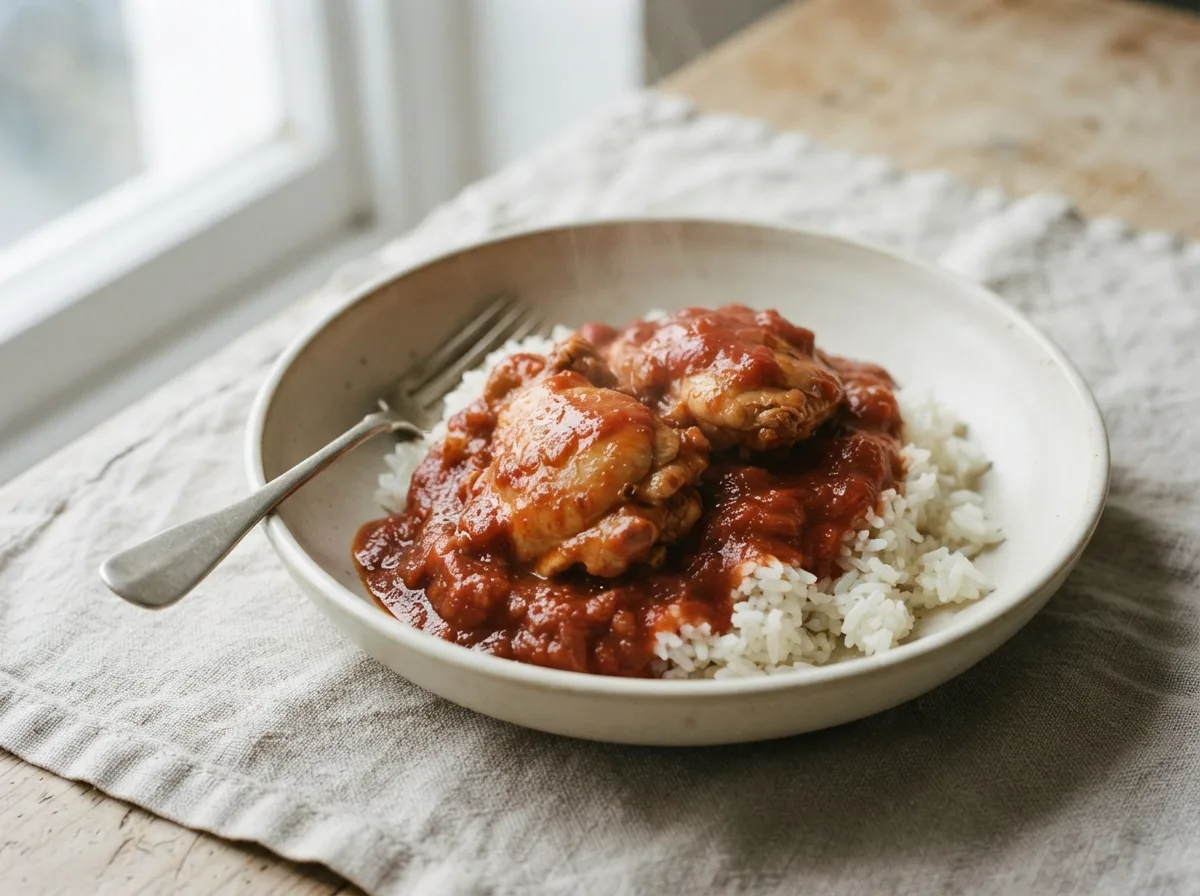
Chicken thigh braised slowly in a deep red passata sauce
Doubles in a wider pan, with a few extra minutes to reduce the sauce back down. The sauce freezes for up to three months without the rice, which is best cooked fresh on the day.
Cacciatore means hunter's style, and the original is deliberately rough, with whole tomatoes, peppers and olives left in large pieces. None of that survives here. Passata takes the place of chopped tomatoes, since it carries no skin or seed at all, and a whole bay leaf goes in to flavour the sauce on the condition that it comes out again before the dish reaches the table. The chicken wants nothing more than a hard sear before it goes in, then half an hour on the lowest heat you have, by which point it gives way at the first touch of a fork. White rice underneath is the plainest option. Soft polenta works well too if that is what you have in the cupboard.
Ingredients
Contains: Celery
- 1 tbspolive oil
- 400 gchicken thigh fillets, skin removed, cut into large pieces
- 2 clovegarlic, peeled and crushed to a paste
- 400 mlpassata
- 150 mlclear chicken stock, strained, or a good stock cube
- 1 leafbay leaf, infused and lifted out before serving
- 160 gwhite rice, basmati or long-grain, rinsed, to serve
- salt
Method
Heat the oil in a large sauté pan or shallow casserole over a medium-high heat. Brown the chicken for 3 to 4 minutes on each side, until deep golden. Remove to a plate.
Turn the heat down low, add the garlic and cook for 1 minute, stirring, until it smells sweet with no colour on it. It softens away completely over the long simmer that follows.
Pour in the passata and stock, add the bay leaf, and return the chicken and any juices to the pan. Bring to a simmer, cover and cook on a low heat for 30 to 35 minutes, until the chicken is completely tender and the sauce has thickened slightly.
Meanwhile, put the rice in a small pan with 280 ml of water and a pinch of salt. Bring to the boil, cover, turn the heat right down and cook for 10 minutes. Take off the heat and leave it covered for a further 5 minutes, then fluff it with a fork.
Lift out and discard the bay leaf. Taste the sauce and season with salt.
Spoon the rice into two warm shallow bowls and ladle the chicken and sauce over the top.
Watch-points
- Cook the garlic gently until it is completely soft, with no raw bite or crisp edge.
- Use a stock that is clear and strained, with no vegetable pieces in it.
- Add the bay leaf whole and lift it out before serving, along with any stray herbs left in the pan. Nothing chopped goes into this sauce.
- Leave out peppers and olives entirely. Their skins do not break down.
Some hospitals allow a bay leaf infused into a sauce and then removed; the leaflet this book follows lists fresh herbs under foods to avoid. Leave it out if you have been told to.
Stoma note: The rice underneath thickens stoma output, which makes this a good plate on a looser day. The polenta version keeps the same effect.
Make it more nourishing
- Stir 2 tablespoons of double cream into the sauce at the end for a milder, richer finish.
- Add 30 g of grated Parmesan to the rice once it is fluffed.
- Use 500 g of chicken thigh instead of 400 for a heartier portion with no extra sauce.
Swaps
- Instead of white rice, use soft cheesy polenta
- a softer alternative that suits a sore mouth well
- Instead of chicken thighs, use chicken breast, cut into large pieces
- leaner, though it needs a shorter simmer of about 20 minutes so it does not dry out