Smooth gravy
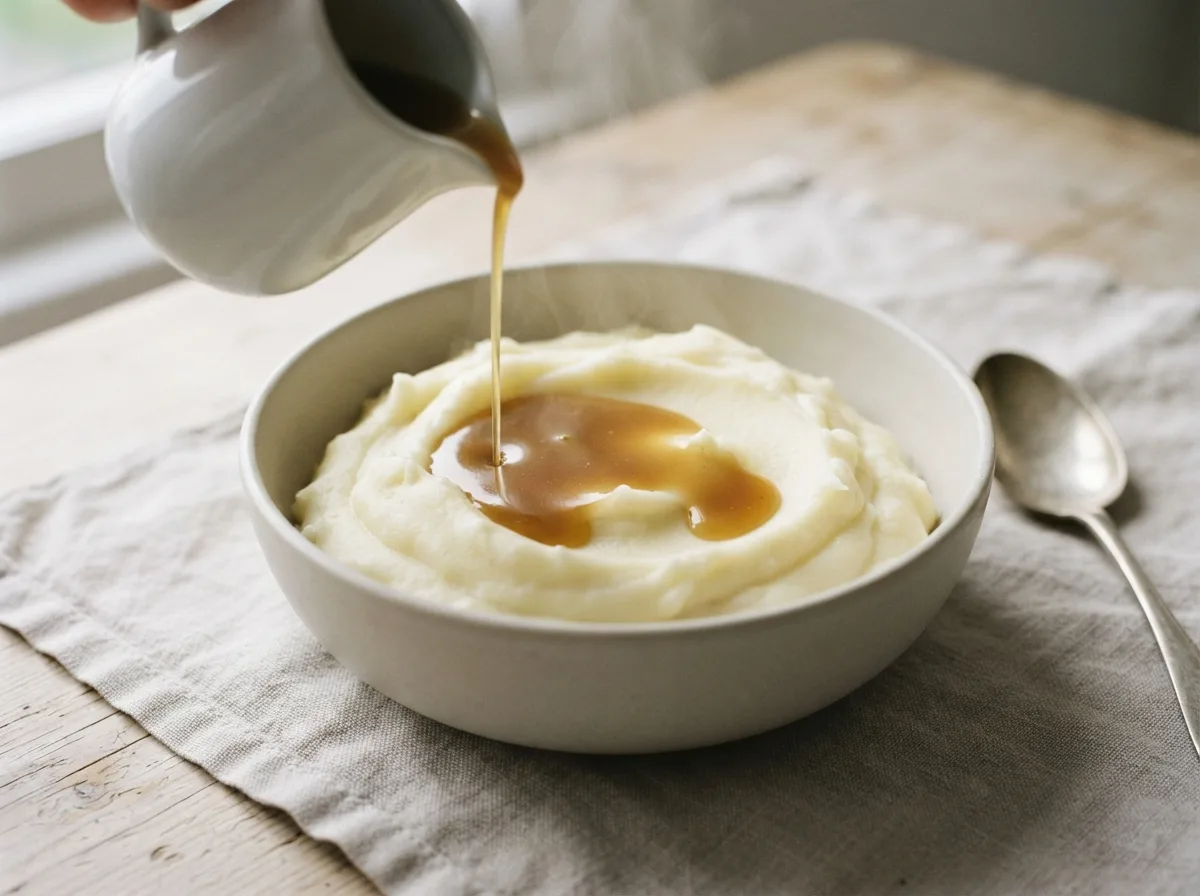
A gravy without a single stray fibre in it
Doubles in a slightly larger pan. Keeps for three days in the fridge or freezes flat in a bag for a month.
Gravy earns its place at almost every dinner in this book, and the difference between a good one and a forgettable one is a fine sieve. Stock is thickened with butter and cornflour, simmered to cook out any starchy taste, then strained so completely that not one fleck of anything solid survives. What is left is glossy, pourable and entirely smooth, ready to go over mash, chicken or a plain sausage without a second thought. Roasting juices, if you have any, go in at the start and improve it without changing the method.
Ingredients
Contains: Milk, Celery
- 300 mlclear stock, chicken, beef or vegetable, strained if home-made, or a good stock cube
- 1 tbspcornflour, slaked in a tablespoon of cold water
- 15 gunsalted butter
- salt
Method
Pour the stock into a small pan and bring to a simmer.
Whisk the slaked cornflour into the simmering stock and keep whisking for 2 to 3 minutes, until the gravy has thickened and no longer tastes starchy.
Whisk in the butter until it has melted in completely, then season with salt.
Pour the gravy through a fine sieve into a warm jug, pressing any last thickened bits through with the back of a spoon, so what reaches the table is completely smooth.
Watch-points
- Use a stock that is clear and strained, with no vegetable pieces in it, or a good stock cube dissolved well.
- Push the finished gravy through a fine sieve before it reaches the table, even when it already looks smooth.
Make it more nourishing
- Whisk in an extra 15 g of butter at the end, for a glossier gravy and about 110 kcal.
- Stir in a tablespoon of double cream once the gravy is off the heat, for a paler, milder version and around 70 kcal.
- Whisk a tablespoon of skimmed milk powder into the cold stock before it heats, for roughly 4 g more protein in the jug.
Swaps
- Instead of some of the stock, use the juices from a roasting tin, fat skimmed and strained
- a deeper, meatier gravy on a day when there is a roast to build it from
- Instead of cornflour, use 15 g of plain flour, whisked into the melted butter first and cooked for a minute before the stock goes in
- a traditional roux-based gravy, though it needs the same final sieve