Cottage pie for two with silky mash
Two small dishes, one for tonight and one for the freezer
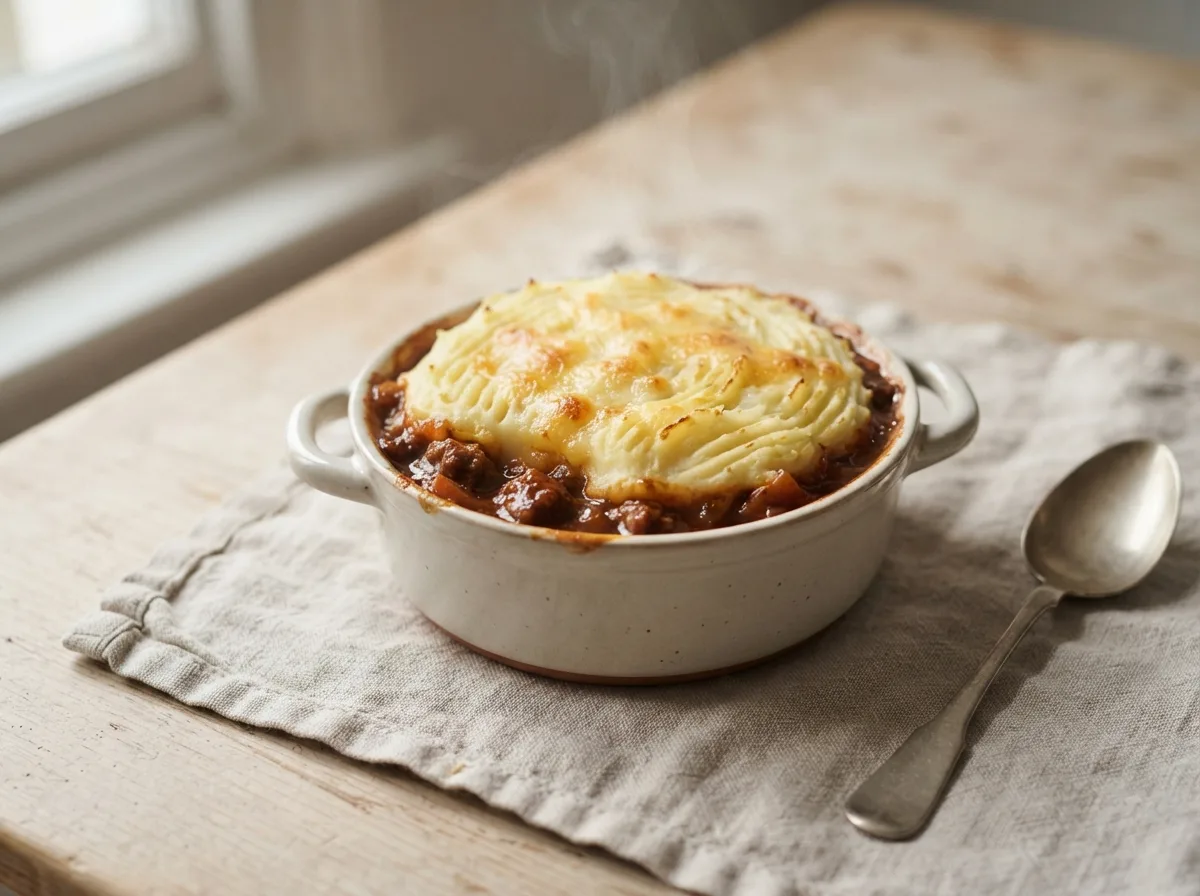
Makes two individual dishes rather than one large one. Freeze whichever you are not eating, well wrapped, for up to three months.
Cottage pie is the dish people miss most, and there is very little reason it should stay off the table. The mince, the gravy, the mash: none of it depends on anything difficult here. What changes is the onion, grated fine and cooked down until it melts into the sauce rather than sitting in strands, and the carrot, diced small and simmered until a fork meets no resistance. Peas and sweetcorn stay out entirely, since their skins pass through undigested. The mash is worth taking seriously in its own right: push it through a sieve or a ricer once mashed, and it turns properly silky rather than merely soft, which matters here more than almost anywhere else in the book. Make two small dishes rather than one, and freeze whichever you are not eating tonight.
Ingredients
Contains: Milk, Celery
- 1onion, peeled and finely grated
- 55 gunsalted butter, 15 g for the onion, 40 g for the mash
- 350 gbeef mince, lean
- 1carrot, peeled and cut into 5 mm dice
- 150 mlpassata
- 1 tbspWorcestershire sauce
- 250 mlclear beef stock, strained, or a good stock cube
- 600 gpotato, peeled and cut into even chunks
- 80 mlwhole milk, warmed
- 1 tbspcornflour, slaked in a little cold water
- 60 gCheddar, grated
- salt
Method
Melt 15 g of the butter in a large, deep frying pan or a shallow casserole over a low heat. Add the grated onion and cook gently for 8 to 10 minutes, stirring often, until it has completely melted down with no colour and no trace of a strand left.
Turn the heat up to medium-high, add the beef mince and break it up with a spoon. Cook for 6 to 8 minutes, stirring, until it is evenly browned all over with no pink left.
Stir in the carrot, passata, Worcestershire sauce and stock. Bring to a simmer, then turn the heat down low, cover and cook for 25 minutes, until the carrot is fully soft and a fork meets no resistance.
Meanwhile, put the potato chunks in a pan of cold water, bring to the boil and cook for 15 to 18 minutes, until a knife slides in with no resistance. Drain well and return to the pan over a low heat for a minute to dry out.
Mash the potato, then push it through a sieve or a potato ricer into a clean bowl for a properly silky texture. Beat in the warm milk and the remaining 40 g of butter until smooth, and season with salt.
The sieve is the step that makes the difference. Mashed alone, potato still holds fine fibrous threads. Pushed through a sieve, it does not.
Mix the cornflour with a tablespoon of cold water to a smooth paste, stir it into the simmering meat sauce and cook for 2 minutes more, until it thickens enough to coat the back of a spoon. Taste and season with salt.
Heat the grill to its highest setting, or the oven to 200°C fan (220°C). Divide the meat between two small pie dishes, spread the mash over the top right to the edges, ripple the surface with a fork and scatter with the Cheddar.
Grill or bake for 12 to 15 minutes, until the top is golden in patches and the cheese has melted. Leave to stand for a couple of minutes before eating. The filling is very hot.
The unbaked second dish freezes well. Wrap it once cool and cook from frozen at the same temperature for about 35 minutes, until piping hot all the way through.
Watch-points
- Grate the onion instead of chopping it, and cook it low and slow until it melts into the sauce rather than sitting in strands. Strands are what a narrowed bowel cannot manage.
- Dice the carrot small and cook it until a fork goes through with no resistance. Anything less and the fibres stay whole.
- Use a stock that is clear and strained, with no vegetable pieces in it.
- Push the mash through a sieve or a ricer rather than leaving it hand-mashed, so it is properly silky with no fibrous threads or lumps.
- Leave out peas, sweetcorn and celery, and skip a bay leaf or fresh herbs unless you infuse and remove them.
Some hospitals allow well-cooked, puréed onion. The leaflet this book follows does not name onion as allowed at all. This book grates it fine and cooks it until it disappears into the sauce. Leave it out entirely if you have been told to.
Make it more nourishing
- Stir an extra 30 g of grated Cheddar into the mash as you sieve it, underneath the topping as well as on it.
- Use 50 ml of double cream in place of some of the milk in the mash for a richer result with no extra volume.
- Add a tablespoon of skimmed milk powder to the meat sauce while it simmers. You will not taste it and it lifts the protein.
Swaps
- Instead of beef mince, use lamb mince, or a mix of beef and pork
- any well-cooked mince behaves the same way in the sauce
- Instead of Cheddar, use Gruyère
- melts just as well and gives a nuttier top