Bangers and mash with onion gravy
Plain sausages and sieved mash under a gravy the onion disappears into
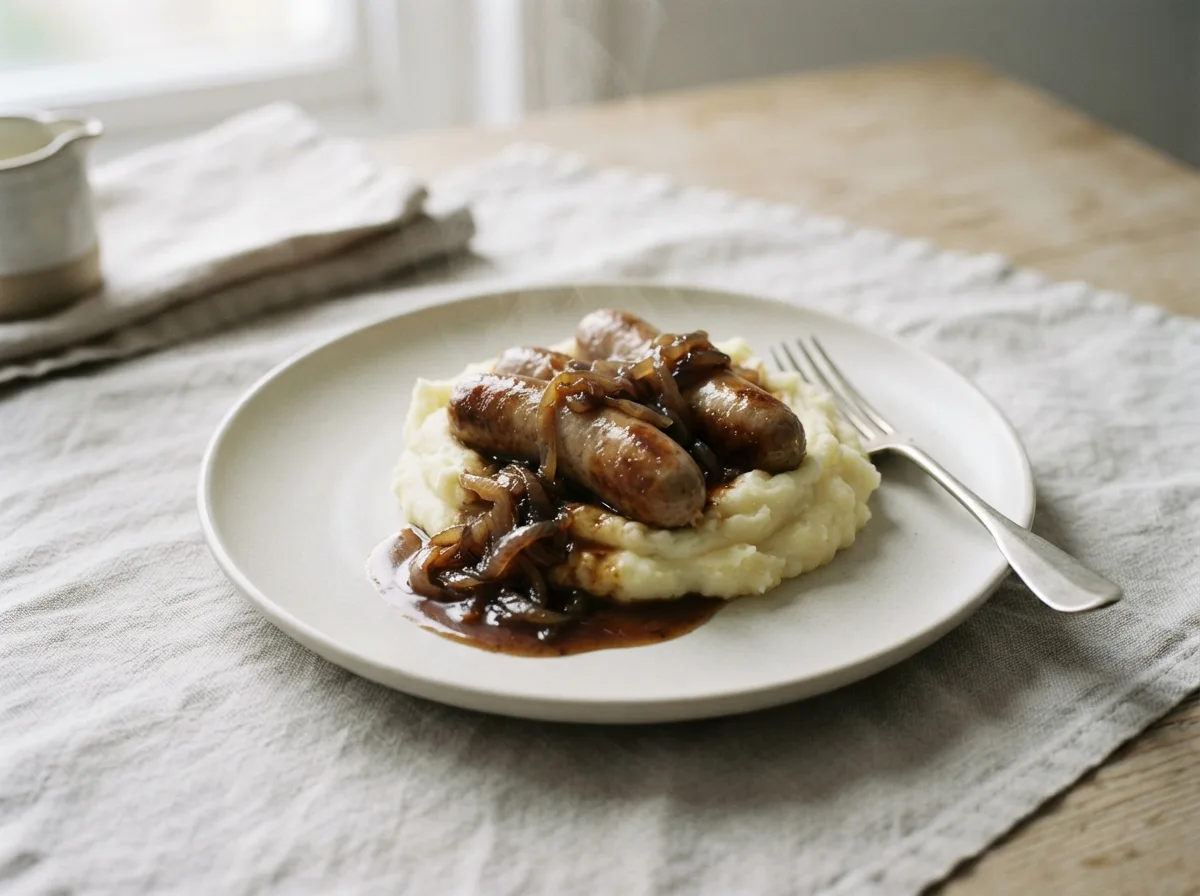
Doubles happily in a bigger pan for the gravy and a wider tray for the sausages. The mash and gravy both freeze well on their own.
Bangers and mash asks almost nothing of you except time with the onion. Sliced thin and cooked low for the best part of half an hour, it collapses down until there is no bite left in it at all, at which point you can either blend it straight into the gravy or strain it out through a sieve if you would rather not see it. Either way, the gravy keeps every bit of the flavour the onion brought. The sausages want nothing more than a low oven and a turn halfway through so every side browns evenly. Push the mash through a sieve once it is mashed, and the whole plate turns properly silky rather than merely soft.
Ingredients
Contains: Milk, Celery
- 6plain pork sausages, skins slit and peeled away after cooking if they are tough
- 55 gunsalted butter, 25 g for the onion, 30 g for the mash
- 1onion, peeled and thinly sliced, cooked to melting and blended or strained out
- 550 gpotato, peeled and cut into even chunks
- 300 mlbeef or chicken stock, clear and strained, or a good stock cube
- 1 tbspcornflour, slaked in a little cold water
- 80 mlwhole milk, warmed
- salt
Method
Heat the oven to 200°C fan (220°C). Put the sausages on a small baking tray and bake for 25 to 30 minutes, turning once, until deep golden all over and cooked through with no pink at the centre.
Meanwhile, melt 25 g of the butter in a pan over a low heat, add the sliced onion, cover and cook for 20 to 25 minutes, stirring now and then, until it is completely soft with no bite left and turning golden.
While the onion cooks, put the potato chunks in a pan of cold water, bring to the boil and cook for 15 to 18 minutes, until a knife slides in with no resistance. Drain well and return them to the pan over a low heat for a minute to dry out.
Pour the stock into the onion, bring to a simmer and cook uncovered for 5 minutes. Blend the gravy smooth with a stick blender so the onion disappears into it, or strain it through a sieve, pressing well, if you would rather leave the onion out entirely.
Stir in the cornflour paste and simmer for 2 minutes, until the gravy coats the back of a spoon. Season with salt and keep warm over the lowest heat.
Mash the drained potato, then push it through a sieve or a potato ricer into a clean bowl for a properly silky texture. Beat in the remaining 30 g of butter and the warm milk until smooth, and season with salt.
Serve the sausages on the mash, with the gravy poured over.
Watch-points
- Cook the onion low and slow until it collapses, then either blend it into the gravy or strain it out through a sieve. What has to go is the shape of the onion, not the flavour it has already given up to the pan.
- Use a plain pork sausage with no onion or herbs mixed through it, and check the label. If the skin is tough once cooked, slit it and peel it away.
- Use a stock that is clear and strained, with no vegetable pieces left in it.
Some hospitals allow well-cooked, blended onion; the leaflet this book follows does not. Leave it out if you have been told to.
Stoma note: Mash and gravy both help thicken stoma output, which makes this a solid choice on a looser day. Onion can still bring on wind even after it has been cooked to nothing, so strain it out and stir a knob of butter into the gravy instead if that has been a problem before.
Make it more nourishing
- Stir 30 g of extra grated Cheddar into the mash once it is sieved.
- Beat 2 tablespoons of double cream into the mash instead of some of the milk.
- Add 1 tablespoon of skimmed milk powder to the gravy while it simmers. You will not taste it.
Swaps
- Instead of pork sausages, use Cumberland-style sausages without herbs
- as long as the label says no onion or herbs, any plain pork sausage behaves the same way
- Instead of beef stock, use chicken stock
- equally smooth, only lighter in flavour