Double-strained chicken stock
The stock every low-appetite freezer should have a tray of
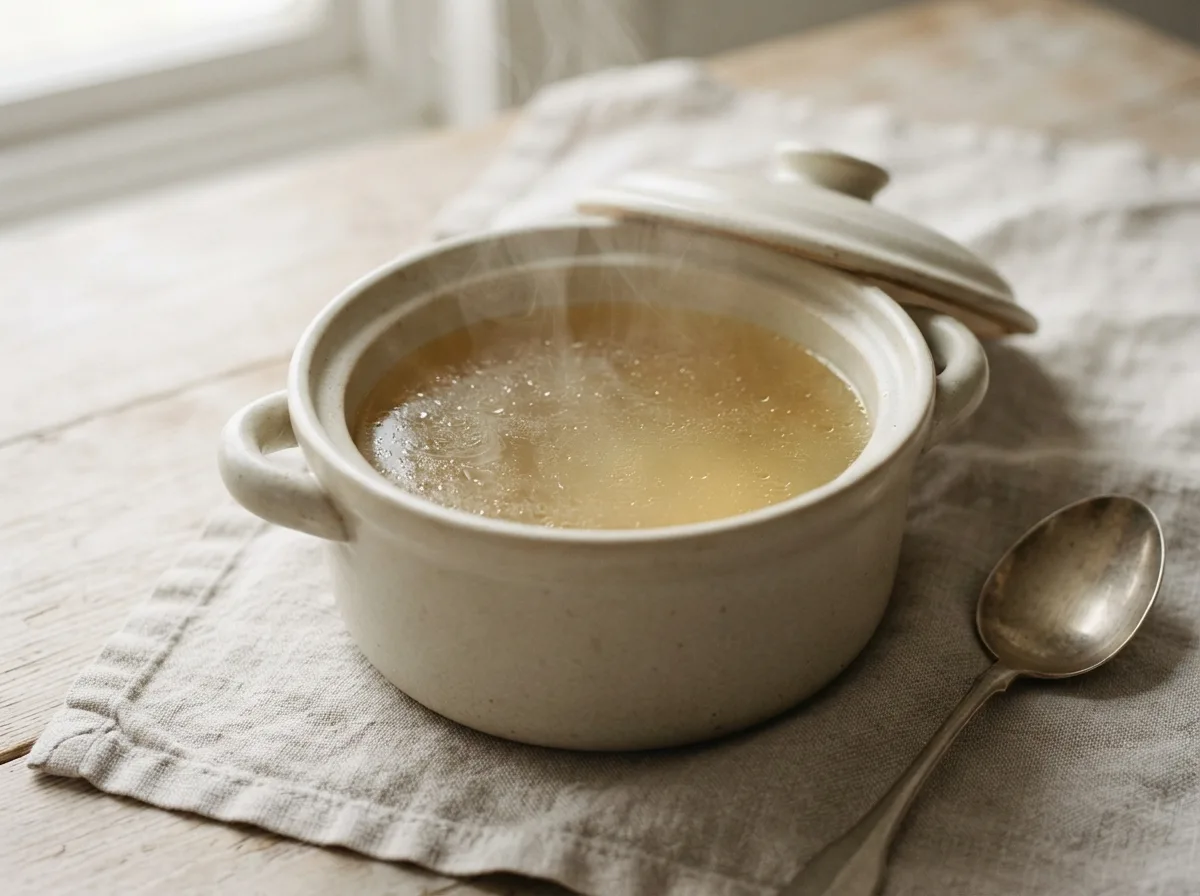
About 2 hours 45 minutes of the total is unattended simmering, plus chilling before you lift off the fat.
The quantities below make about 2 litres. Halving or doubling both work, though a very large batch needs a stockpot rather than an ordinary saucepan.
A stock like this asks for time rather than effort, since almost all of the three hours it takes needs no attention from you. A raw carcass, or the bones from a roast, goes into a pot with water, a peeled carrot and a peeled onion, and simmers until the liquid tastes properly of chicken. Straining it twice, once through a sieve and once through muslin, means not one shred of vegetable or fleck of fat survives into the finished stock. Frozen flat in ice-cube trays, it becomes an instant base for a soup on a day when cooking from scratch is too much.
Ingredients
- 1chicken carcass, raw, or saved from a roast chicken, skin pulled off, broken into 2 or 3 pieces
- 2carrot, peeled and roughly chopped, simmered until soft, then discarded when the stock is strained
- 1onion, peeled and quartered, simmered until soft, then strained out and discarded
Method
Put the carcass, the carrot and the onion into a large stockpot and cover with about 2.5 litres of cold water.
Bring slowly to a bare simmer over a medium heat. As it comes up to temperature, skim off any grey foam that rises to the surface with a spoon.
Turn the heat down as low as it will go and simmer, uncovered, for 2 hours 45 minutes, topping up with a little water if it drops below the level of the bones. The liquid should taste strongly and cleanly of chicken by the end.
Strain the stock through a sieve into a large bowl, pressing the bones and vegetables lightly to get the last of the liquid out, then discard everything left in the sieve.
Once the stock is cool enough to handle, strain it a second time through a fresh piece of muslin or a clean tea towel set inside the sieve, into a clean container. This catches the last flecks of fat and sediment the first straining missed.
Chill the stock completely, then lift off and discard the solid layer of fat that sets on the surface. Freeze in ice-cube trays or small tubs. It keeps three days in the fridge and three months in the freezer.
Watch-points
- Peel the carrot and the onion before they go into the pot, even though both are discarded at the end rather than eaten.
- Strain the stock twice, once through a sieve and once through muslin, and discard the bones and vegetables completely each time.
- Chill the stock fully before you lift off the fat, so you get a clean layer rather than a fatty film stirred through the liquid.
Some hospitals allow well-cooked onion; the leaflet this book follows does not. Leave it out if you have been told to.
Make it more nourishing
- Stir 15 g of butter into a hot mugful before drinking it plain, which adds about 110 kcal to a cup that otherwise carries very few.
- Whisk a tablespoon of skimmed milk powder into a mugful as it heats, for around 4 g of protein and 45 kcal.
- Add 500 g of chicken wings to the pot alongside the carcass. The stock sets to a soft jelly when cold, which is gelatine, and it gives more body to everything built on it.
Swaps
- Instead of a whole carcass, use 500 g of chicken thighs or drumsticks, skin removed
- gives a good stock even without a leftover roast to hand