Spaghetti carbonara
The twenty-minute dinner that happens to be exactly right
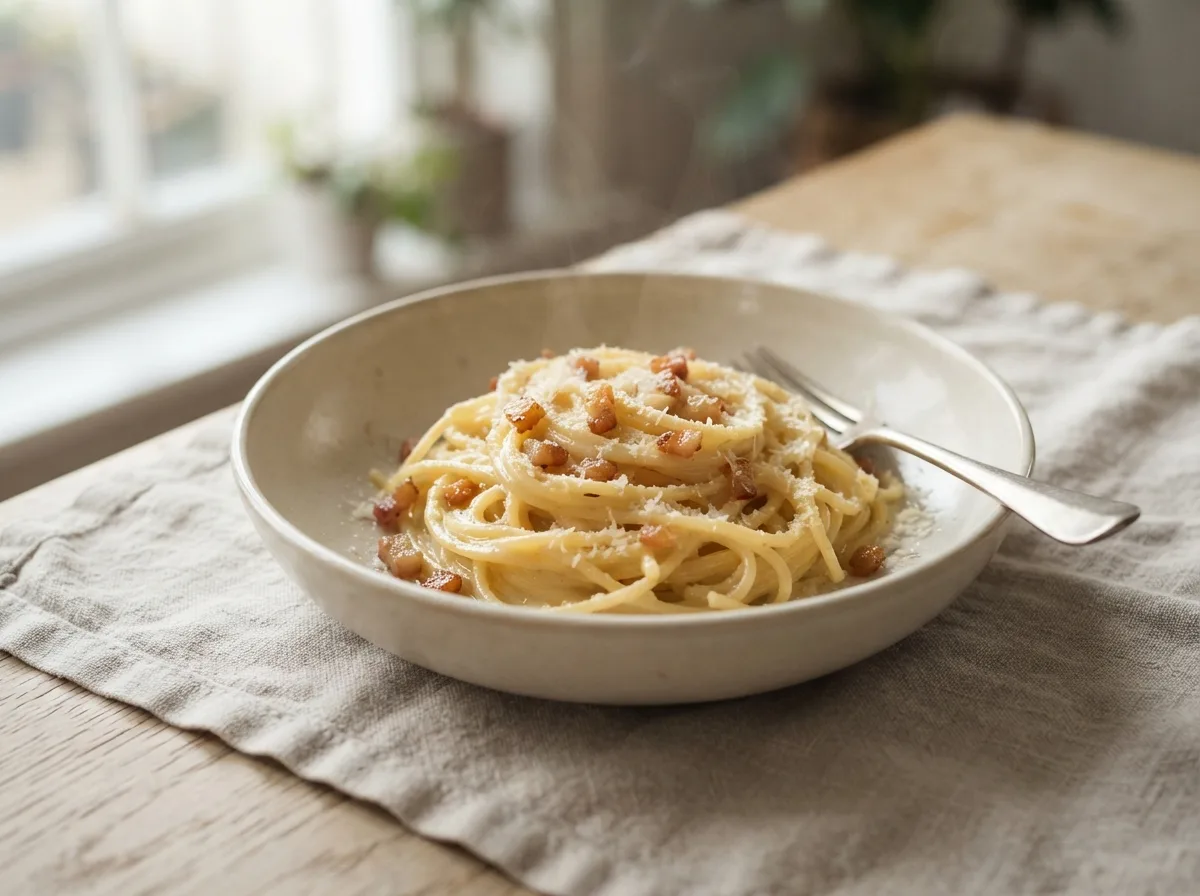
Halves cleanly for one. Do not double in one pan. The sauce needs the heat of a small amount of pasta.
Carbonara is one of the few famous dishes that needs no adapting at all. White pasta, rendered pancetta, egg, Parmesan and the starchy water from the pan. Nothing else was ever supposed to be in it. The eggs here are an ingredient, not the point. They turn into a sauce that clings to every strand and you never see them as eggs. The whole thing comes together in the time the pasta takes to cook, which makes it the dinner to hand to anyone who has been nervous about cooking on this diet. Two rules. Cook the pasta a minute longer than you normally would, so it is properly tender. And take the pan off the heat before the egg goes in, so it thickens into cream rather than scrambling.
Ingredients
Contains: Gluten, Egg, Milk
- 180 gspaghetti, white, not wholewheat
- 100 gpancetta or smoked streaky bacon, rind removed, cut into small dice
- 1 tspolive oil
- 2eggs
- 1egg yolk
- 50 gParmesan, finely grated, plus a little more to serve
- salt
- 1 pinchfinely ground white pepper — optional
Method
Bring a large pan of water to the boil and salt it well. Cook the spaghetti for one minute longer than the packet says, so it is fully tender with no chalky centre. Before you drain it, scoop out a mugful of the cooking water and keep it.
While the pasta cooks, put the pancetta and the oil in a wide frying pan over a medium heat. Let it render slowly for 6 to 8 minutes until the fat has run and the pieces are golden and crisp at the edges but not hard. Turn the heat off.
Slow rendering matters. Fast frying gives you tough little nuggets. Slow gives you tender pieces and a pan of flavoured fat.
In a bowl, whisk the eggs, the extra yolk and the Parmesan together with the pepper if you are using it, until smooth.
Drain the pasta and tip it straight into the frying pan with the pancetta. Toss it through the fat for a few seconds. Then, with the pan off the heat, pour in the egg mixture and a splash of the reserved water and toss, and keep tossing, for a full minute. The residual heat cooks the egg into a glossy sauce that coats the strands. Add more water a spoon at a time if it looks tight.
Taste for salt, divide between two warm bowls and finish with a little more Parmesan. Eat immediately. Carbonara does not wait.
Watch-points
- White spaghetti only. Wholewheat and spelt pastas are off the list.
- Cut the pancetta or bacon small and render it soft. Remove any rind.
- No black pepper in visible grinds. A small pinch of finely ground white pepper at most, or none.
Some hospitals allow a pinch of ground pepper. The leaflet this book follows lists spices under foods to avoid. Leave it out if you have been told to.
Make it more nourishing
- Add a second egg yolk to the sauce. It makes the dish richer and adds protein without changing the method.
- Use 70 g of Parmesan instead of 50.
- Stir a tablespoon of mascarpone into the egg mixture. Not traditional, very good.
Swaps
- Instead of pancetta, use diced cooked ham warmed in a little butter
- no rendering needed. Milder
- Instead of Parmesan, use Grana Padano or mature Cheddar
- Cheddar is less traditional but melts well and is always in the fridge