Pouring custard
A jug of proper custard, ready for whatever pudding needs it
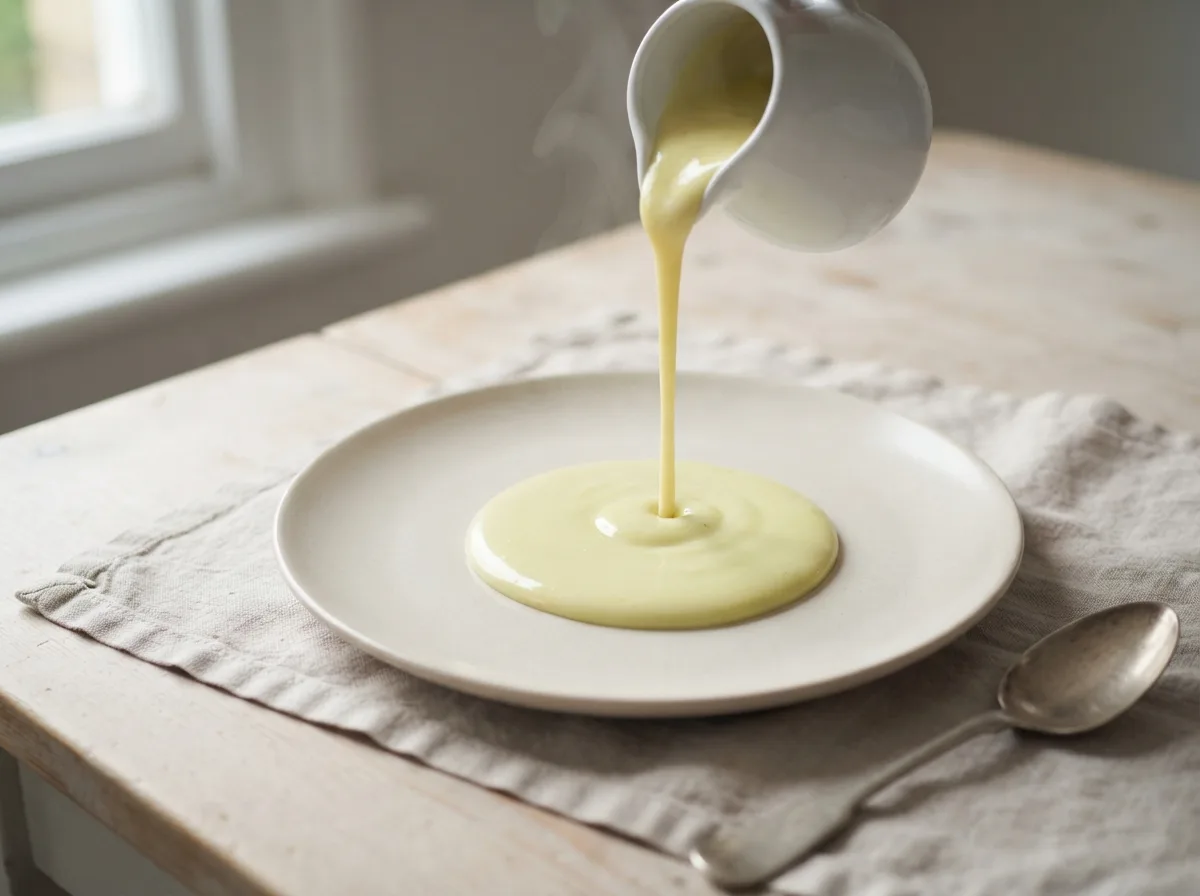
Doubles in a wider pan. Keeps for two days in the fridge, covered with cling film pressed onto the surface to stop a skin forming.
Shop custard is a fair shortcut on a tired day, but a jug made properly takes only slightly longer and coats a spoon in a way the carton rarely does. Egg yolks and sugar are whisked pale, hot milk and cream poured over them, and the whole lot goes back on a low heat until it thickens enough to leave a clear line across the back of the spoon. Go one degree past that and the eggs scramble instead, so a low heat and constant stirring matter more than speed. Pour it warm over stewed fruit or a steamed sponge, or chill it for later.
Ingredients
Contains: Milk, Egg
- 3egg yolks
- 30 gsugar
- 200 mlwhole milk
- 100 mldouble cream
- 1 tspvanilla extract
Method
Whisk the egg yolks and sugar together in a heatproof bowl until pale and slightly thickened.
Heat the milk, cream and vanilla in a pan over a medium heat until steaming, with small bubbles just starting at the edge, but not boiling.
Pour the hot milk over the egg yolks in a thin stream, whisking constantly, then pour the whole mixture back into the pan.
Cook over a low heat, stirring constantly with a wooden spoon, for 5 to 8 minutes, until the custard thickens enough to coat the back of the spoon and hold a clear line when you drag a finger through it. Take it off the heat the moment this happens.
If it looks close to catching or scrambling at the edges, lift the pan off the heat straightaway and keep stirring. A few seconds past the right point turns it grainy rather than smooth.
Pour through a fine sieve into a warm jug, to catch any thread of cooked egg, and serve straightaway, or cool and chill for later.
Watch-points
- Cook the custard over a low heat and keep stirring throughout. Do not let it boil, or the egg will scramble instead of thickening.
- Pour the finished custard through a fine sieve before it reaches the jug, even when it looks smooth.
- The custard is cooked gently rather than boiled, so the egg thickens without ever setting firm. If your team has asked you to avoid lightly cooked egg during chemotherapy, use a good shop custard instead.
Make it more nourishing
- Use 4 egg yolks instead of 3, for a thicker custard and about 55 kcal and 3 g of protein more.
- Whisk 2 tablespoons of skimmed milk powder into the milk before it heats, for around 8 g more protein and 85 kcal.
- Use 300 ml of double cream in place of the milk and cream together, which more than doubles the calories in the jug and makes it rich enough to count as a pudding on its own.
Swaps
- Instead of making it from scratch, use a good full-fat shop custard, warmed gently
- quicker on a low-energy day, though it never quite matches the flavour of the homemade version