Lemon sole in brown butter with silky mash
The classic bistro plate, home-sized
Doubles easily in the same frying pan if it is wide enough for two fillets, or fry the second batch straight after the first.
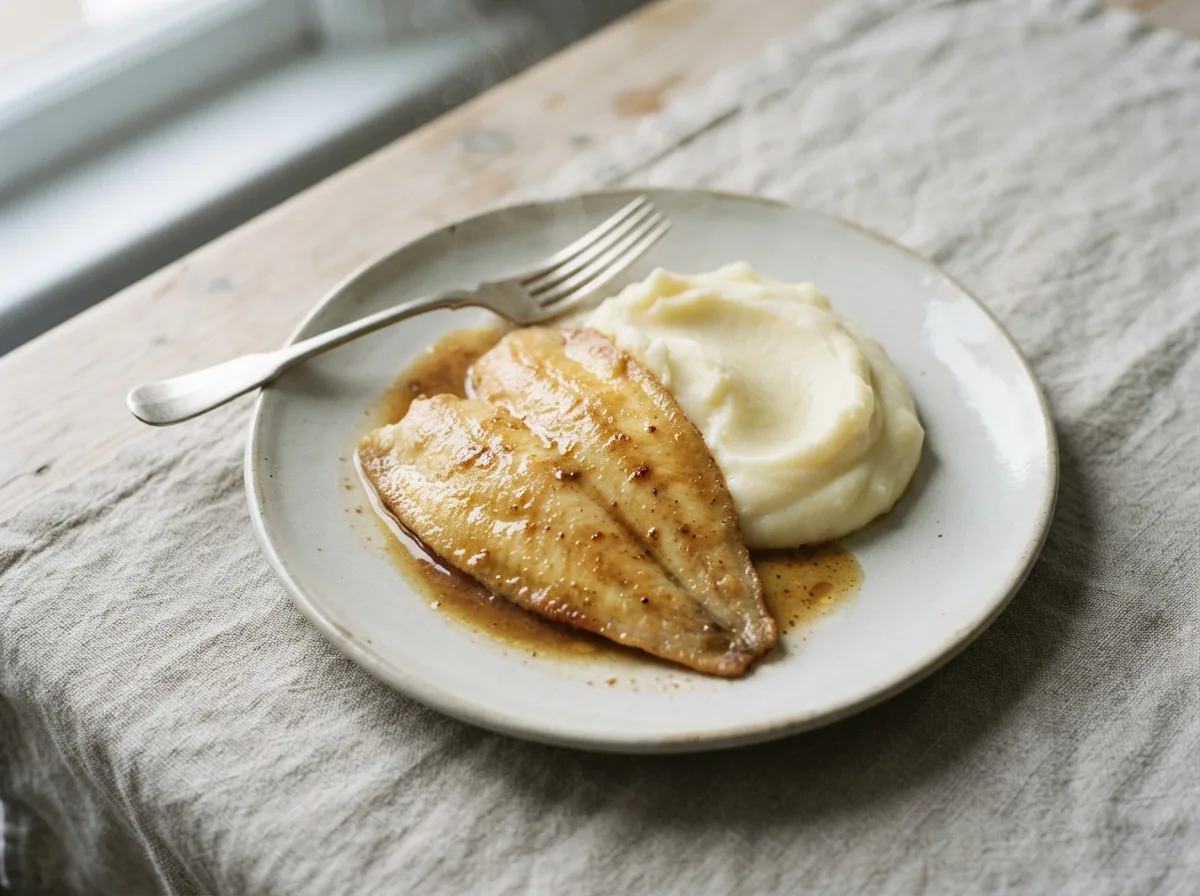
Meunière means nothing more than "in the style of the miller's wife": fish dusted in flour and fried in butter. The whole method sits inside that one phrase. Lemon sole is thin enough to cook through in a couple of minutes a side, so the real attention goes on the butter afterwards, which you cook on its own until the milk solids turn a deep amber-brown and the smell turns warm and toasted, then tip straight over the fish while it hisses. A squeeze of lemon juice at the very end cuts through the richness. No capers and no chopped parsley go over the top here, and the butter is easier to taste for their absence. Mash pushed through a sieve turns properly silky and holds the sauce well.
Ingredients
Contains: Fish, Gluten, Milk
- 300 gpotato, peeled and cut into even chunks
- salt
- 2lemon sole fillets, about 90 g each, skinless and boneless
- 2 tbspplain white flour, for dusting
- 50 gunsalted butter, 15 g for the mash, 20 g for frying, 15 g for the brown butter
- 50 mlwhole milk, warmed
- 1 tbsplemon juice
Method
Put the potato in a pan of cold water with a small pinch of salt, bring to the boil and cook for 15 to 18 minutes, until a knife slides in with no resistance.
Meanwhile, season the sole fillets with a little salt and dust them lightly all over in the flour, shaking off any excess.
Drain the potato and return it to the dry pan over a low heat for a minute to dry out. Mash it, then work it through a sieve with the back of a spoon until it is silky. Stir in 15 g of the butter and the warm milk, season with salt, and cover the pan to keep it warm.
Melt 20 g of the butter in a wide frying pan over a medium-high heat. Fry the sole for 2 to 3 minutes on each side, until golden and it flakes easily when pressed. Lift onto a warm plate.
Wipe out the frying pan and melt the remaining 15 g of butter over a medium heat. Swirl the pan as it foams, then cooks on, until it turns a deep amber-brown and smells toasted, about 1 to 2 minutes.
Watch it closely once it starts to colour. The gap between amber-brown and burnt is short.
Take the pan off the heat straight away and stir in the lemon juice, which will splutter. Pour the brown butter over the sole immediately.
Serve with the mash alongside.
Watch-points
- The sole is skinless and boneless. Run a finger over each fillet before you dust it, in case a stray bone remains.
- Dust lightly in white flour only, shaking off the excess so it browns rather than turns doughy.
- Lemon juice only, stirred into the butter off the heat. No zest, no whole segments.
- Peel the potato and cook it fully soft, then push the mash through a sieve so no fibrous strand is left.
Stoma note: As with any potato mash, this thickens stoma output rather than loosening it.
Make it more nourishing
- Beat an extra 15 g of butter into the mash off the heat. It adds about 110 kcal and makes it glossier.
- Use a thicker knob of butter, up to 30 g, for the brown butter stage and spoon the extra over the fish.
- Stir a tablespoon of double cream into the mash along with the milk, for about 70 kcal more.
Swaps
- Instead of lemon sole, use plaice or a skinless white fish fillet such as haddock
- any thin fillet takes well to the same dusting and frying, though thicker fillets need another minute or two
- Instead of potato mash, use instant mash made with whole milk
- a faster stand-in on a low-energy day