Potato gnocchi in sage-infused butter
The book's one weekend project
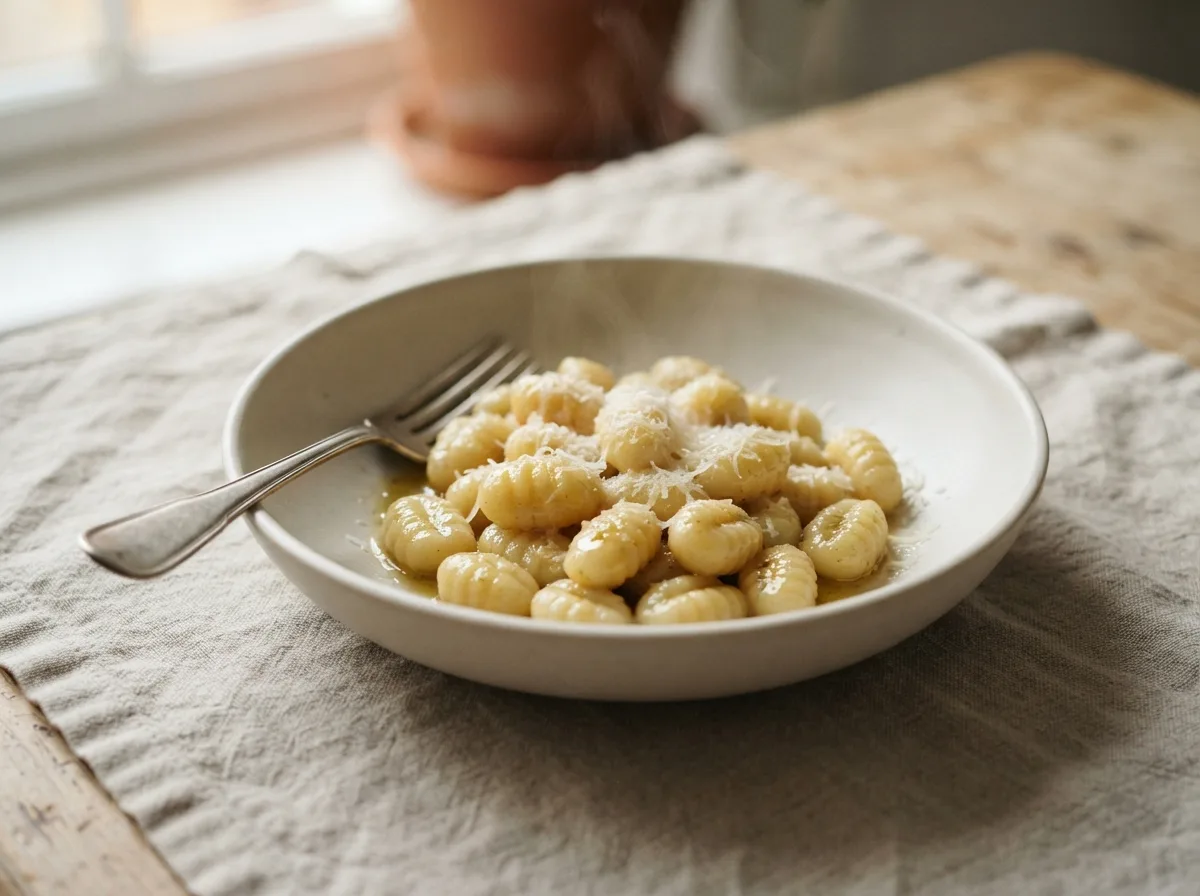
Doubles for four in a bigger bowl, but poach the gnocchi in more batches so the water never stops moving. Uncooked gnocchi freeze well. Cooked ones do not.
Gnocchi is the one dish here that asks for a proper afternoon, not twenty minutes, and it rewards the time it takes. Everything comes down to how dry you can get the potato before the flour goes in: rice it while it is still hot, add only as much flour as the dough will take, and stop working it the moment it holds together. Overworked dough turns gnocchi tough instead of giving you the soft, cushiony bite you are after. The sage butter at the end takes three minutes and looks far more impressive than it is, whole leaves melted in butter until both turn the colour of a digestive biscuit, then lifted straight back out. Make a full batch and freeze half, uncooked, for a day when the potato part feels like too much.
Ingredients
Contains: Gluten, Egg, Milk
- 550 gpotato, peeled and cut into even chunks
- salt
- 1egg yolk
- 150 gwhite flour, plus a little extra for dusting
- 75 gunsalted butter
- 10 leafsage leaves, left whole
- 30 gParmesan, finely grated, to finish
Method
Put the potato chunks in a large pan, cover with cold water, salt it well, and bring to the boil. Cook for 15 to 18 minutes, until a knife slides in with no resistance at all.
Drain very well and tip the potato back into the dry pan over a low heat for a minute, shaking gently, to steam off any last moisture. Push it through a ricer or a fine sieve into a large bowl while it is still hot.
Let the potato cool for five minutes, until just warm. Make a well in the centre, add the egg yolk and a good pinch of salt, and scatter the flour over the top. Bring it together with your hands into a soft dough, working it as little as you can.
Turn the dough out onto a floured surface and cut it into four pieces. Roll each piece into a rope about 2 cm thick, then cut across into 2 cm lengths.
A light dusting of flour on the surface and your hands stops the dough sticking without working extra flour into it.
Bring a large pan of well-salted water to a gentle boil. Drop in the gnocchi in two or three batches so the water never stops moving, and lift each batch out with a slotted spoon about a minute after it floats to the surface, when it is cooked through with no floury centre.
While the last batch cooks, melt the butter in a wide frying pan over a medium-low heat. Add the sage leaves and let the butter foam and turn a light golden brown, about 3 minutes, until the leaves are crisp at the edges. Lift out and discard every leaf.
Tip the drained gnocchi into the sage butter and toss gently to coat, loosening with a spoonful of the gnocchi water if the pan looks dry.
Divide between two warm plates, scatter with the Parmesan, and eat straight away.
To freeze, spread the uncooked gnocchi on a floured tray, not touching, and freeze until solid before bagging. Cook from frozen, straight into the boiling water, adding about a minute to the time.
Watch-points
- Use plain white flour, and only as much as the dough needs. Wholemeal or spelt flour is off the list here, as it is everywhere else in this book.
- Peel the potato before it goes into the pan, and rice or sieve it well afterwards so there is no trace of skin in the dough.
- Sage leaves count as one of the fresh herbs in this book: infuse them into the butter for flavour only, then lift out every single leaf. None are eaten.
Some hospitals allow a fresh herb cooked directly into a dish; the leaflet this book follows does not. Leave it out if you have been told to.
Stoma note: Potato and white flour together thicken stoma output rather than loosening it. A smaller first plate is a fair test.
Make it more nourishing
- Beat an extra 15 g of butter into the sage butter just before tossing the gnocchi through it.
- Use 45 g of Parmesan instead of 30, and stir half of it through the gnocchi rather than saving it all for the top.
- Melt 30 g of mascarpone through the hot gnocchi at the table, for about 130 kcal and a sauce that clings more heavily.
Swaps
- Instead of sage leaves, use a small bay leaf, infused in the butter and removed the same way
- a milder, less resinous flavour
- Instead of Parmesan, use a vegetarian-certified hard cheese
- Parmesan is traditionally made with animal rennet, which rules it out for a strict vegetarian kitchen