Plain scones with jam and cream
The cream tea, stripped down to what actually matters
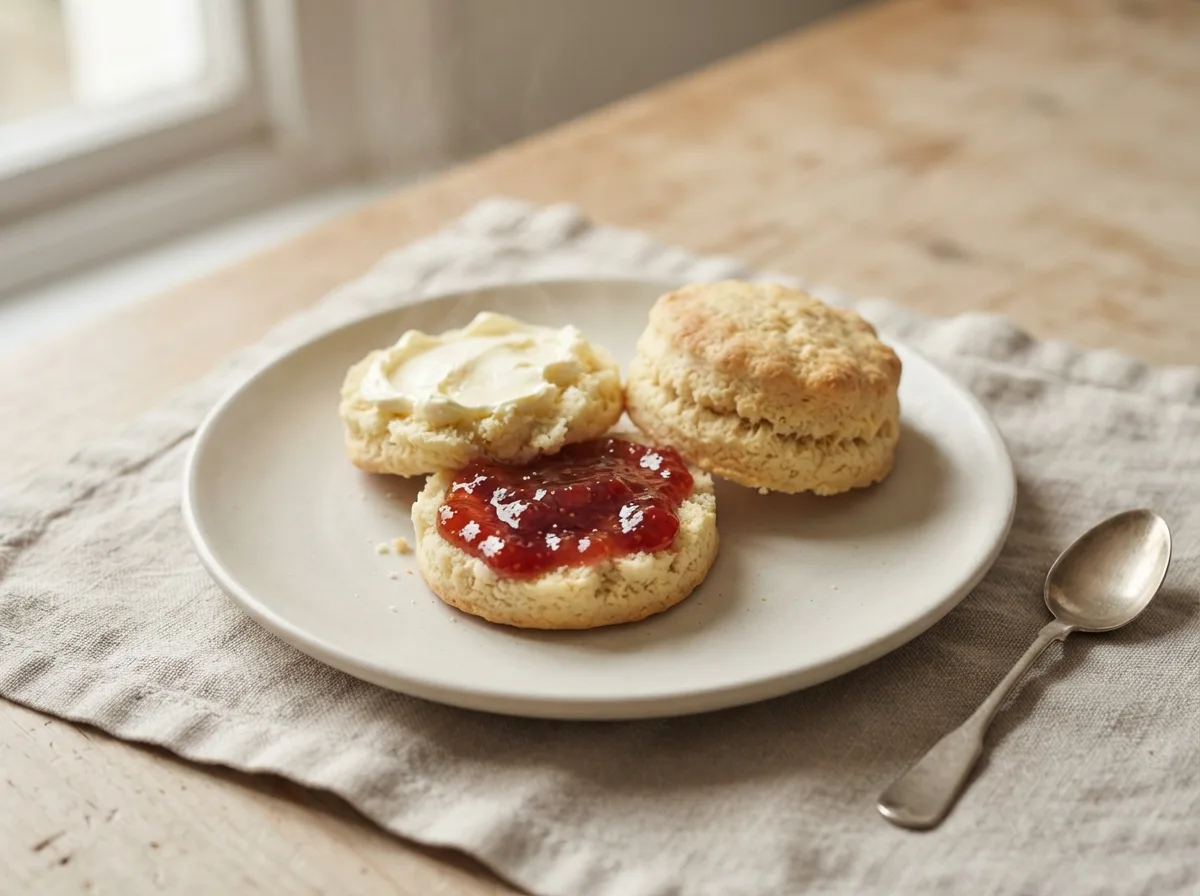
Makes 6. Freeze whichever you do not eat on the day, baked or unbaked, for up to a month, and add the jam and cream only once they are warm again.
A scone needs three things and no more: a light hand with the dough, seedless jam, and a good spoon of clotted cream. The dough here is nearly identical to the cheese version elsewhere in the book, sugar in place of the Cheddar, which tells you how little separates a savoury bake from a sweet one. Bake them pale rather than deep brown. A scone that colour stays tender in the middle instead of drying out at the edges, and drying out is the thing that makes a scone hard work to eat. Split one while it still has heat in it, so the jam runs slightly and the cream begins to soften before you have picked up a spoon.
Ingredients
Contains: Gluten, Milk
- 225 gself-raising white flour, plus extra for dusting
- salt, a small pinch
- 25 gcaster sugar
- 50 gunsalted butter, cold, cut into small cubes
- 150 mlwhole milk, plus a little more to glaze
- 6 tbspseedless jam
- 6 tbspclotted cream
Method
Heat the oven to 200°C fan (220°C) and line a baking sheet with baking parchment.
Sieve the flour and salt into a bowl and stir in the sugar.
Rub the butter into the flour until it looks like fine breadcrumbs.
Make a well in the centre, pour in most of the milk, and mix quickly with a table knife to a soft dough, adding more milk only if it will not come together.
Turn the dough out onto a floured surface, pat to a thickness of about 2 cm, and cut into six rounds with a 5 cm cutter, gathering the offcuts once to cut the last one or two.
Place the rounds on the sheet and brush the tops with a little milk.
Bake for 10 to 12 minutes, until risen and pale gold on top rather than deep brown. They stay softer in the middle baked this way.
Resist the urge to leave them in for extra colour. Pale scones are the tender ones.
Split each scone while still warm, spread a tablespoon of jam over the cut face, then top with a tablespoon of clotted cream.
Watch-points
- Seedless jam only. Check the label for a jam with pips, peel or seeds in it.
- White self-raising flour only, not a wholemeal or seeded flour.
- A scone is a dry, crumbly thing by nature. Eat it warm, with plenty of jam and cream on it, and have a cup of tea alongside so nothing goes down dry.
Make it more nourishing
- Add a second tablespoon of clotted cream to each half. That is about 60 kcal a scone for no more bulk.
- Warm 2 tablespoons of the jam in a small pan with 15 g of butter and spread that instead. It soaks into the crumb rather than sitting on it.
- Brush the baked tops with 10 g of melted butter as they come out of the oven.
Swaps
- Instead of clotted cream, use whipped double cream
- lighter, and usually already in the fridge
- Instead of whole milk in the dough, use buttermilk, with 175 ml in place of the 150 ml of milk
- it gives a softer crumb and a slightly higher rise