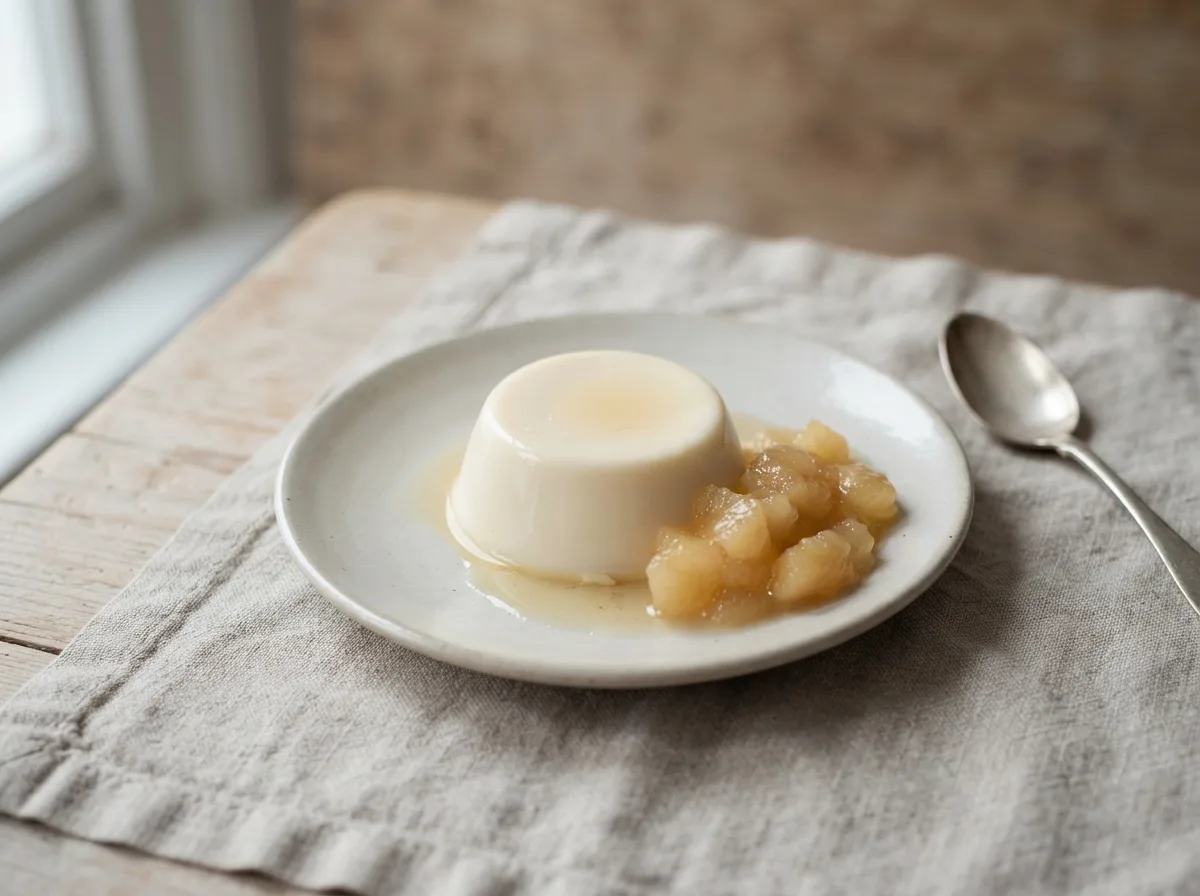
Vanilla panna cotta with stewed apple
A softly set cream, and the sharpness of stewed apple to cut it
plus at least 4 hours setting, or overnight
Doubles in a slightly larger pan and sets in four glasses instead of two. Both the panna cotta and the apple keep three days in the fridge, covered.
Panna cotta means cooked cream, and almost nothing else happens to it. Cream and milk warm with sugar and vanilla until they steam, soaked gelatine goes in off the heat, and the fridge does the rest. The one thing worth watching is the gelatine itself. Squeeze the leaves out properly after their soak, because the water they carry in with them thins the cream and slackens the set. Stewed apple takes the place of the fruit coulis a panna cotta usually arrives with, and its sharpness cuts the richness in the same way. Two leaves give a set that trembles when you tap the glass and still holds its shape turned out.
Ingredients
Contains: Milk
- 2 leafleaf gelatine, about 3.5 g, platinum grade
- 250 mldouble cream
- 100 mlwhole milk
- 40 gcaster sugar, 25 g for the cream, 15 g for the apple
- 1 tspvanilla extract
- 300 geating apples, peeled, cored, deseeded and cut into rough chunks
Method
Soak the gelatine leaves in a bowl of cold water for 5 minutes, until they have gone completely floppy.
Put the cream, the milk, 25 g of the sugar and the vanilla extract in a small pan. Warm gently until steaming, with small bubbles starting at the edge, stirring until the sugar has dissolved and without letting it boil.
Take the pan off the heat. Lift the gelatine out of its water, squeeze it firmly between your hands, and stir it into the hot cream until it has dissolved with no strand of it left on the spoon.
Off the heat is the point. Gelatine boiled hard loses some of its setting strength.
Pour through a small sieve into two glasses, ramekins or moulds. Cool at room temperature for 20 minutes, then cover and chill for at least 4 hours, or overnight, until fully set with only a slight wobble when you tap the side.
Meanwhile, put the peeled, cored and deseeded apple in a small pan with the remaining 15 g of sugar and a splash of water. Cover and cook gently for 8 to 10 minutes, stirring once or twice, until the apple has collapsed into a soft, pale compote with no firm pieces left.
Push the compote through a sieve if you want it completely smooth, or leave it loosely mashed. Cool completely, then chill until needed.
Spoon the stewed apple over the set panna cotta, or turn each one out first by dipping the mould briefly in hot water, running a knife around the edge and inverting it onto a small plate.
Watch-points
- Peel, core and deseed the apple completely, and cook it right down to a soft compote with no firm pieces left. Skin and pips do not soften with stewing, however long you give them.
- Stir the gelatine in off the heat and keep stirring until every strand has gone. A strand left whole sets into a rubbery thread.
- Chill the panna cotta for the full 4 hours before you try to turn it out. A softly set pudding will not hold its shape if it is rushed.
- Leave off the berry coulis a panna cotta usually arrives with. The seeds in it are exactly what this diet asks you to skip.
Make it more nourishing
- Use all cream in place of the milk, 350 ml in total, for a much richer set in the same volume.
- Whisk 1 tbsp of skimmed milk powder into the milk before it goes into the pan. It dissolves without changing the flavour and lifts the protein.
- Spoon 40 g of thick smooth yoghurt alongside the apple, for extra protein without adding to the pudding itself.
Swaps
- Instead of eating apples, use tinned pear halves, warmed and mashed
- no peeling or cooking down needed, and it is naturally soft enough already
- Instead of double cream, use single cream, with the gelatine unchanged
- a lighter, less rich set with the same wobble, since it is the gelatine and not the fat that sets it