Vanilla blancmange
A softly set milk pudding, no eggs and no gelatine involved
plus 2 hours setting
Scales up easily. Use a wider pan for a bigger batch so the mixture thickens evenly rather than catching at the edges.
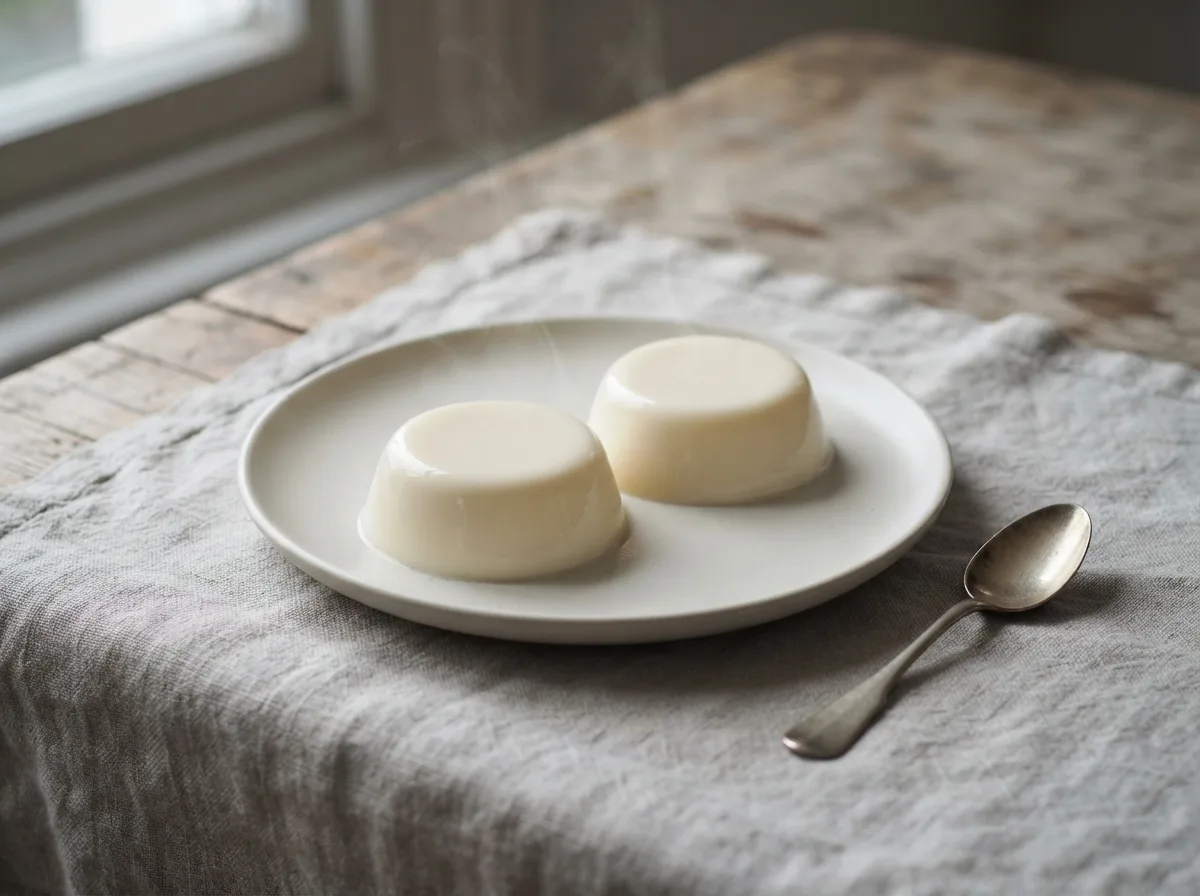
Blancmange has a reputation it does not deserve, the tinned-in-a-rubber-mould pudding remembered from institutional kitchens rather than the soft, milky set it can actually be. There is no egg in it and no gelatine either: cornflour does the whole job, cooked out properly so the pudding tastes of milk and vanilla rather than raw starch. The difference between a good one and a bad one is entirely in the stirring. Keep a wooden spoon moving through the three or four minutes on the heat and you get something glossy and smooth rather than lumpy or floury at the edges. It sets firm enough to turn out of a mould onto a plate, wobbling gently, or you can leave it in the glass it was poured into and eat it with a spoon straight from the fridge.
Ingredients
Contains: Milk
- 300 mlwhole milk, 3 tablespoons reserved cold, the rest heated
- 25 gcornflour
- 30 gcaster sugar
- 1 tspvanilla extract
- 15 gunsalted butter, for shine — optional
Method
Put the 3 reserved tablespoons of milk in a small bowl or cup and whisk in the cornflour until you have a smooth, lump-free paste.
Pour the rest of the milk into a pan with the sugar and heat gently until it is steaming but not boiling.
Pour the hot milk onto the cornflour paste, whisking constantly, then tip the whole lot back into the pan.
Set the pan over a medium heat and cook, stirring all the time, for 3 to 4 minutes, until the mixture thickens into a smooth, glossy pudding that coats the back of the spoon thickly. Stir in the vanilla, and the butter if using, until melted through.
Rinse two small moulds, ramekins or glasses with cold water and leave them wet, which is what lets the pudding slide out later. Divide the mixture between them, smooth the tops, cover and chill for at least 2 hours, until fully set and firm to the touch.
Run a thin knife around the edge, invert onto a plate and hold both together for a moment until the pudding drops. Or serve it straight from the glasses.
Watch-points
- Whisk the cornflour paste smooth before it goes anywhere near the heat, so the finished pudding has no lumps in it.
- Stir constantly while it thickens on the stove. A moment left unstirred and it catches on the base of the pan.
Make it more nourishing
- Use 100 ml of double cream in place of 100 ml of the milk, for a richer set.
- Stir 2 tablespoons of skimmed milk powder into the cornflour paste before it goes into the pan. You will not taste it.
- Spoon warm golden syrup or a little seedless jam over the top right before serving, for extra calories with no extra volume.
Swaps
- Instead of vanilla extract, use a whole vanilla pod, left unsplit, infused in the hot milk and lifted out
- a rounder flavour, and leaving the pod whole keeps the seeds out of the pudding