Salmon in a paper parcel with butter sauce
One parcel, and a sauce that makes itself out of the juices
Doubles by using two parcels side by side on the same tray, and doubling the mash pan. Bake for the same time.
A parcel does two things a frying pan cannot. It steams the fish gently in its own butter and wine rather than searing it, so the salmon stays soft rather than crisping at the edges, and it collects every drop of the cooking liquid instead of losing it to the pan. That liquid, once you tip it out and strain it, is already three-quarters of a beurre blanc: buttery, faintly sharp with lemon, and needing only a boil to concentrate it and a minute of whisking cold butter in off the heat. Nothing is sprinkled over the finished plate, deliberately, so the sauce alone carries the dish. Serve it over mash pushed through a sieve, which takes two extra minutes and changes the whole plate.
Ingredients
Contains: Fish, Milk, Sulphites
- 300 gpotato, peeled and cut into even chunks
- salt
- 1salmon fillet, about 150 g, skinless and boneless
- 40 gunsalted butter, 10 g for the parcel, 15 g for the mash, 15 g cold for the sauce
- 50 mlwhite wine
- 1 tbsplemon juice
- 50 mlwhole milk, warmed
Method
Put the potato in a pan of cold water with a small pinch of salt, bring to the boil and cook for 15 to 18 minutes, until a knife slides into a chunk with no resistance at all.
Heat the oven to 200°C fan (220°C). Tear off a large sheet of baking parchment and lay the salmon fillet in the centre. Season with salt, dot with 10 g of the butter, and pour over the wine and lemon juice.
Gather the parchment up around the fish and scrunch it tightly at the top to seal, leaving a little room inside for steam. Set the parcel on a baking tray and bake for 12 to 15 minutes, until it has puffed up and the fish is opaque all the way through.
Meanwhile, drain the potato and return it to the dry pan over a low heat for a minute. Mash well, then push it through a sieve for a silky texture. Beat in the warm milk and 15 g of the butter, and season with salt.
Open the parcel carefully, away from your face, as hot steam will escape. Tip the juices through a small sieve into a small pan and keep the salmon warm under a plate.
The parcel traps almost everything the fish gives off while it cooks, so do not skip pouring the juices out. It is most of the sauce already made.
Boil the juices hard for a minute, until reduced by about half and starting to look syrupy, then take the pan off the heat and whisk in the remaining 15 g of butter, a small piece at a time, until the sauce turns thick and glossy enough to coat the back of a spoon.
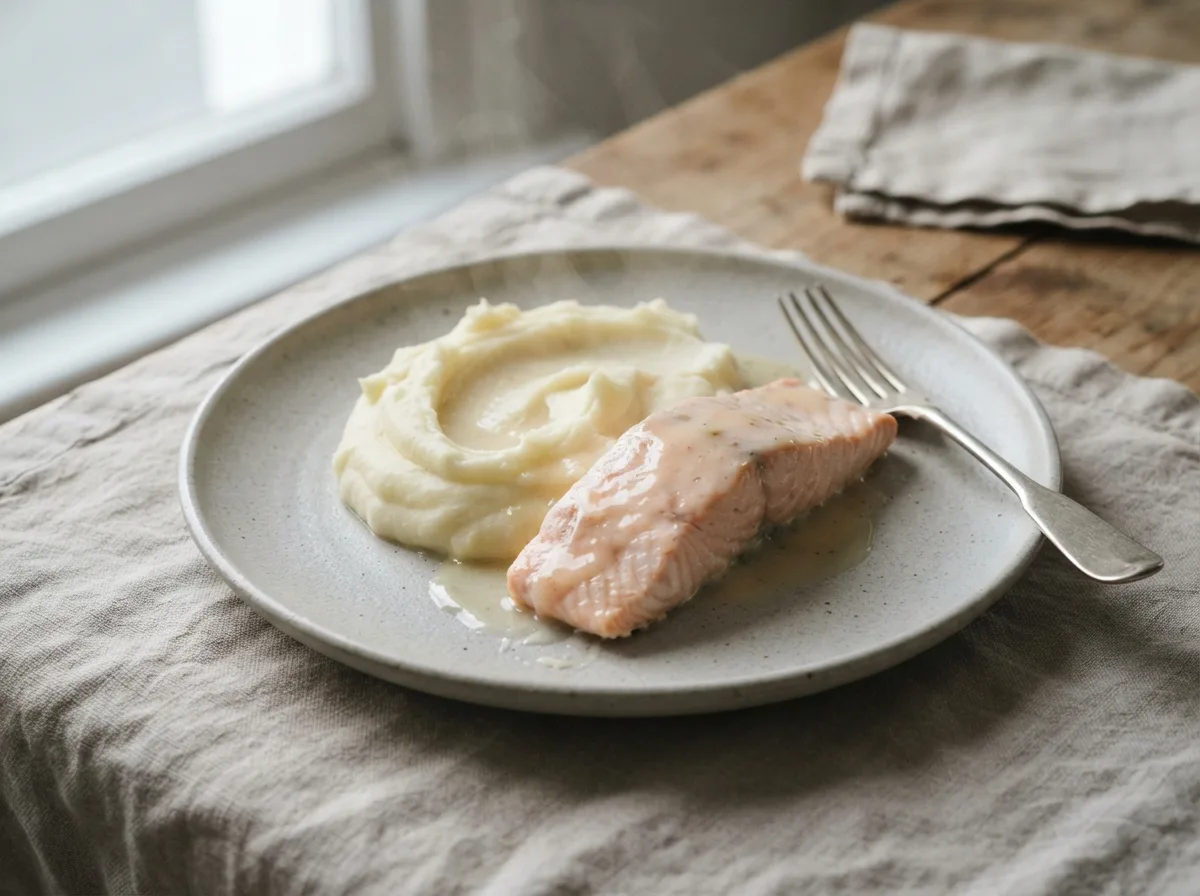
Spoon the mash onto a warm plate, set the salmon on top and pour over the sauce.
Watch-points
- Salmon is skinless and boneless here. Run a finger over the fillet before it goes into the parcel and lift out any pin bones.
- Lemon juice only, no zest or pith, in the parcel and in the sauce.
- Peel the potato fully and cook it until a knife meets no resistance, then push the mash through a sieve so it stays smooth.
- No herbs go into the parcel and nothing is sprinkled over the plate. The wine and lemon carry all the flavour once they reduce.
Stoma note: The potato in the mash thickens stoma output, useful if things have been loose.
Make it more nourishing
- Beat an extra 15 g of butter into the mash right before serving. It adds about 110 kcal without changing the texture.
- Whisk a tablespoon of double cream into the reduced juices before the butter goes in. It makes the sauce softer and less likely to split.
- Use a thicker salmon fillet, closer to 200 g, rather than a wide, thin one. More fish, same method.
Swaps
- Instead of salmon, use a skinless white fish fillet such as cod
- it cooks in the same parcel in a similar time, though it flakes more easily once it is done
- Instead of white wine, use an extra 50 ml of stock with a little more lemon juice
- keeps the acidity in the sauce without the alcohol