Fine or instant polenta
With care — Allowed by some hospitals and not others, or allowed only prepared a particular way.
In one line: Use the fine or instant grade only. Coarse or wholegrain cornmeal is off the list.
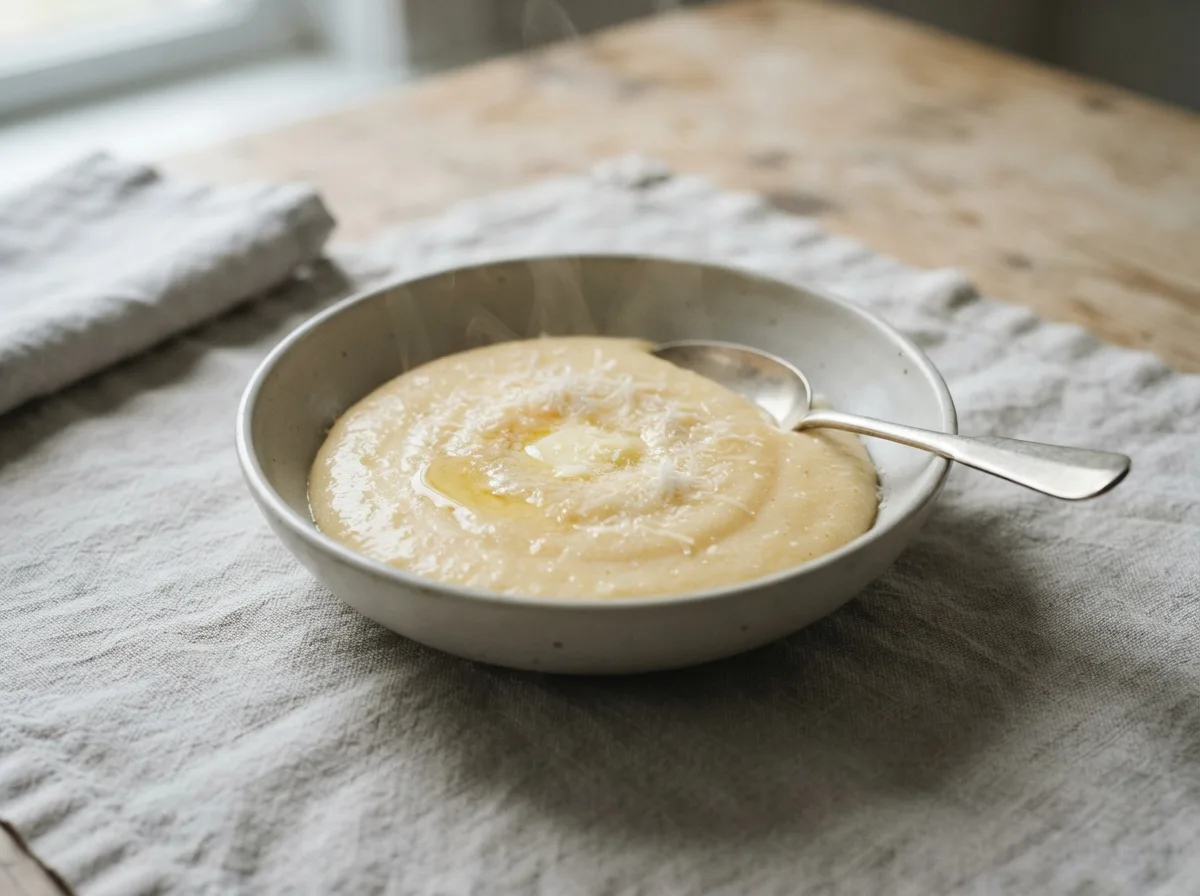
Polenta is dried maize ground to a meal. What matters on this diet is how finely it has been ground and whether the bran and germ have been taken out. Fine or instant polenta is a refined, finely milled grain that cooks to a smooth porridge and behaves much like semolina. Coarse polenta and stoneground or wholegrain cornmeal are a different product and are not used here.
The preparation
Fine or instant grade only. Check the packet, since "quick cook" and "instant" usually indicate a fine grind but not always, and some bags marked bramata are deliberately coarse. Cook it in stock and milk rather than water, whisking as it goes in, and give it longer than the packet says. It should be smooth on the tongue with no grittiness left at all.
Finish it with butter and hard cheese, which is where most of the pleasure is.
Where hospitals differ
Polenta is not named on the leaflet this book follows. Refined maize products are allowed by St George's and by Leeds, and cornflour and cornflakes are allowed by the leaflet, so a finely milled maize meal sits comfortably in the same family. This book treats it as allowed and says that the leaflet does not name it.
If you have been told to leave it out
Fine semolina cooked the same way gives an almost identical bowl, and mashed potato does a similar job under a sauce.